
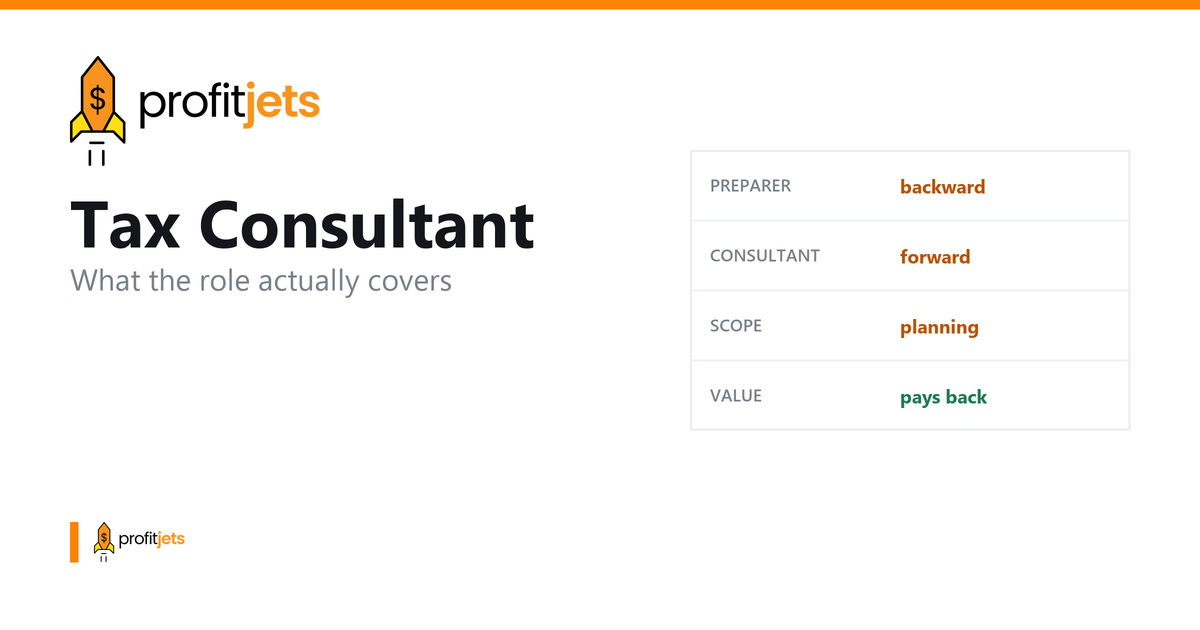
Most business owners, see their tax professional only one time per year. A folder of documents gets passed over in March, a return comes back in April, and the conversation is centered on something that has already happened. And, if the bill is larger than expected, there is not much that can be done about it other than pay it.
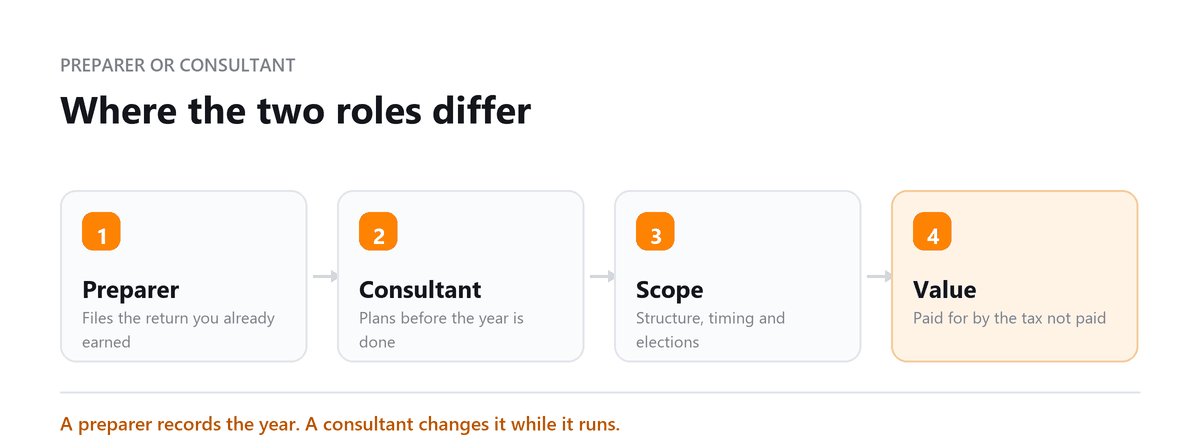
A tax consultant works on a different timeframe. They aren't focused on what has already happened, but rather on influencing what is about to happen.
They can advise on the best business structure for your profits, the timing of purchases, the size of your retirement contribution, the payment method for owners, or the tax impact of a new state, employee or sale before any of these decisions are finalized.
That difference is magnified as a business grows. A simple return and a W-2 for a small home business don't need consistent year round advice. But a profitable business, with employees, multiple owners, or activity in several states, may need the expertise of a tax consultant as the most beneficial tax decisions are made well ahead of the due date.
This guide explains what a tax consultant does, how they differ from a tax preparer, the credentials to look for, what they typically do for small businesses, what they cost, and how to choose the right one.
What is a Tax Consultant?
A tax consultant provides strategic advice beyond return preparation. Their role includes:
- Identifying legal tax reduction opportunities specific to your situation
- Advising on business structure changes (LLC vs S-Corp, etc.)
- Multi-state tax planning for businesses with nexus across states
- Representing clients in IRS audits and correspondence
- Long-term tax planning aligned with financial goals
The point to move from a tax preparer to a tax consultant is when your return starts depending on decisions made during the year rather than just data collected at the end of it. That usually happens once profit reaches the level where an S corporation election is on the table, when you hire your first employee, or when you start selling or working in another state. At that stage, the most expensive mistakes aren't errors on the return. They're the planning opportunities nobody raised in time.
Anu Gupta, CA, EA, B.Tech · LinkedInTax Consultant vs Tax Preparer
| Factor | Tax Preparer | Tax Consultant |
|---|---|---|
| Primary role | Prepares and files returns | Strategic tax planning + filing |
| Timing | Reactive, end of year | Year-round, proactive |
| Credentials | Varies (PTIN required) | CPA, EA, or tax attorney |
| Scope | Current-year compliance | Multi-year strategy |
| IRS representation | Limited (non-credentialed) | Unlimited (EA/CPA/Attorney) |
How to Find the Best Tax Consultant
Credentials to Look For
Certified Public Accountant
CPAs are licensed by state boards of accountancy after passing the CPA exam and meeting education and experience requirements. They must complete continuing education to keep their license. Not every CPA specializes in tax, so ask about their tax experience specifically.
Enrolled Agent
Enrolled agents are licensed by the IRS after passing a comprehensive exam covering individual and business tax, or through qualifying IRS work experience. Their practice focuses entirely on tax, and they complete ongoing continuing education.
Tax Attorney
Tax attorneys are licensed lawyers who specialize in tax law. They're especially valuable for tax disputes, litigation, criminal tax matters, and complex transactions where legal advice and privilege matter.
Unrecognized Rights for Other Preparers
Preparers without these credentials can still prepare returns with a PTIN. Those who complete the IRS Annual Filing Season Program can represent clients in limited situations involving returns they prepared, but they can't represent clients in appeals, collections, or most audits.
Essential Skills of a Good Tax Consultant
Deep knowledge of federal and state tax law, including how the rules apply to your industry.
A strong understanding of accounting and financial statements, since good tax advice depends on accurate books.
The ability to model scenarios, such as comparing entity structures, timing purchases, or estimating the effect of a retirement contribution.
Clear communication, so you understand the trade-offs behind each recommendation.
Staying current, since tax law changes regularly through legislation, IRS guidance, and court decisions. Major changes enacted in 2025 are a good example of why this matters.
What a Tax Consultant Does for Small Businesses
Choosing and Reviewing Your Business Structure
A consultant can model whether your business should stay a sole proprietorship or LLC, elect S corporation status, or operate as a C corporation, and revisit that choice as profit grows.
Setting Up Owner Compensation
For S corporation owners, a consultant helps set a reasonable salary that holds up to IRS scrutiny while balancing payroll taxes and the qualified business income deduction.
Capturing Deductions and Credits
They make sure you're claiming everything you're entitled to, from home office and vehicle costs to depreciation elections, the qualified business income deduction, and business credits like the research credit.
Planning Estimated Taxes
A consultant can project your tax during the year and set quarterly estimated payments that avoid underpayment penalties without tying up more cash than necessary.
Timing Income and Expenses
They can advise when it makes sense to accelerate or delay income, buy equipment, or prepay expenses, based on your expected tax rate this year and next.
Handling Multistate Obligations
As you add employees, customers, or locations in other states, a consultant can identify where you need to register, withhold, collect sales tax, or file returns.
Preparing and Filing Returns
Many consultants also prepare the returns that result from their planning, including Form 1040, Form 1120-S, Form 1065, payroll filings, and state returns.
Representing You Before the IRS
If you receive a notice, face an audit, or owe back taxes, a credentialed consultant can communicate with the IRS for you and negotiate payment arrangements or penalty relief.
How Much Does a Tax Consultant Cost?
Fees depend on the complexity of your situation, your location, the consultant's credentials, and whether you want one-time help or ongoing advice. As a general guide:
| Service | Typical Range |
|---|---|
| Individual return with a simple Schedule C | $300 to $800 |
| S corporation return plus the owner's personal return | $1,000 to $3,000 |
| Ongoing advisory with quarterly planning and filing | $3,000 to $15,000 or more a year |
| IRS notice response or audit representation | Often billed hourly or as a project fee |
Many consultants charge a fixed annual or monthly fee for ongoing work, which makes it easier to ask questions during the year without worrying about hourly charges.
Benefits of Hiring a Tax Consultant
Lower Taxes Through Planning
The biggest savings usually come from decisions made during the year, such as entity elections, retirement contributions, and equipment timing, rather than from filling in the return differently.
Fewer Errors and Less Stress
A professional review reduces the risk of mistakes that lead to notices, penalties, or amended returns.
Help When the IRS Gets in Touch
A credentialed consultant can handle IRS and state correspondence for you, which saves time and usually leads to faster resolution.
Time Back in the Business
You don't have to learn complex, changing rules every year. That time goes back into running the company.
Advice Before Big Decisions
Hiring, expanding into a new state, buying property, taking on investors, or selling the business all carry tax consequences that are much easier to manage before the decision than after.
How to Choose the Right Tax Consultant
Verify Their Credentials
Confirm a CPA's license with the state board of accountancy, an enrolled agent through the IRS Directory of Federal Tax Return Preparers with Credentials and Select Qualifications, and a tax attorney through the state bar.
Look for Relevant Experience
Ask whether they regularly work with businesses like yours in size, industry, and structure, whether that's e-commerce, real estate, professional services, or startups.
Ask How They Work
Find out whether they offer year-round planning or mainly prepare returns, how often you'll meet, how quickly they respond, and what's included in the fee.
Understand the Pricing
Get a clear engagement letter showing scope, fees, and what counts as additional work.
Check Their Technology and Security
Ask how they share and store documents, whether they use a secure client portal, and how they protect your financial data.
Watch for Red Flags
Be cautious of anyone who promises a specific refund before reviewing your situation, bases fees on the size of your refund, won't sign the returns they prepare, or suggests claiming deductions you don't qualify for.
How Profitjets Helps
Profitjets provides tax preparation and year-round tax advisory for small and mid-size US businesses. That includes business structure reviews, S corporation salary planning, quarterly tax projections, multistate guidance, and preparation of business and personal returns, supported by bookkeeping that keeps the numbers behind every recommendation accurate.
Conclusion
A tax consultant's value isn't just in filing a correct return. It's in the planning that happens before the year ends and the advice you get before major decisions. For simple returns, a good preparer or tax software is often enough.
For growing businesses with employees, multiple owners, activity in several states, or profit high enough to make structure decisions worthwhile, year-round tax advice usually pays for itself. Check credentials carefully, choose someone with experience in businesses like yours, and make sure the engagement covers planning, not just paperwork.
Book a free consultation and we will look at the year ahead.
Frequently Asked Questions
What's the difference between a tax consultant and a CPA?
A CPA is a state-issued license. A tax consultant is a role. Many CPAs work as tax consultants, but not all CPAs specialize in tax. Enrolled agents and tax attorneys can also serve as tax consultants, and some people use the title without any of these credentials.
When should I hire a tax consultant?
Consider it when your taxes start depending on decisions rather than just paperwork, such as starting or growing a business, reaching a profit level where an S corporation election is worth modeling, hiring employees, operating in more than one state, buying real estate, or receiving equity compensation. Earlier is usually better, since planning only helps before the year ends.
Is a tax consultant worth the cost?
For many growing businesses, yes. The value depends on your situation. If a consultant helps you choose the right structure, time major purchases, and avoid penalties and missed deductions, the savings can easily exceed the fee. For simple returns with few decisions to make, the benefit is smaller.
Can a tax consultant represent me in an IRS audit?
Only if they hold the right credentials. CPAs, enrolled agents, and tax attorneys can represent clients before the IRS on any tax matter. Other preparers have very limited representation rights, generally only for returns they prepared.
Do I still need a bookkeeper if I hire a tax consultant?
In most cases, yes. A bookkeeper keeps your transactions recorded and reconciled throughout the year. A tax consultant uses those records to plan and prepare returns. Good tax advice depends on accurate books, so the two roles work best together.

Written by
Anu Gupta, CA, EA, B.Tech
Anu works with US businesses on tax and entity questions at Profitjets, from choosing a structure to the filings that follow it. She writes about the decisions owners make once and then live with for years. Connect on LinkedIn
Free consultation
Want Planning, Not Just Filing?
Book a free consultation and we will look at the year ahead.