
Blogging has grown from a passion and side hustle to the business model. The creators these days are expanding their revenue stream by following services such as advertising, affiliate marketing and collaboration featuring benefits at the same time. Though the income is significant,there is an increasing need for the financial framework to support the modern opportunities.
When the business scales with increasing revenue from multiple sources and platforms, managing tax obligations and availing eligible deductions is more significant than ever. Tax obligations for bloggers include navigating self employment taxes and quarterly/annual tax payment liabilities. Handing all these without a structured bookkeeping practice will amount to expensive errors. To pass through the tax season with confidence, maintaining proper bookkeeping practice is essential.
The main challenge that bloggers face is calculating the recurring expense with travel, marketing platforms and equipment purchase along with staffing expenses. Good bookkeeping helps understand the financial picture of the business and anchor toward sustainability. Building the right financial practice early will safeguard your working capital from the expensive mistakes.
This article lists the bookkeeping practices that bloggers must follow to ensure tax compliance seamlessly.
A lot of bloggers treat their income as casual money until suddenly they are dealing with self-employment tax, quarterly payments, and a confusing mix of affiliate payouts and brand deal invoices. Getting organised early costs almost nothing. Waiting costs a lot.
Abhinav Gupta, CPA, CA, MBA · LinkedInWhat is Bookkeeping for Bloggers?
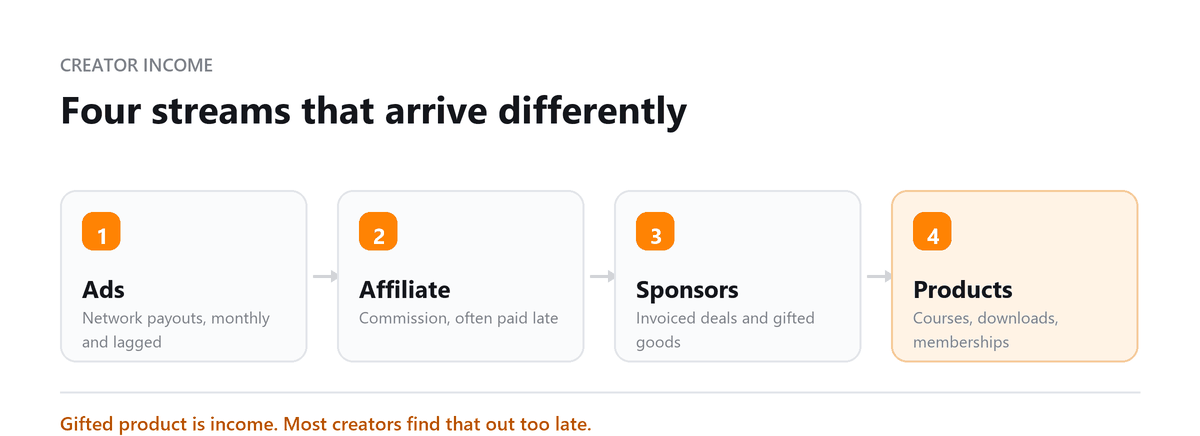
Bookkeeping for bloggers means recording, categorising, and organising every financial transaction associated with your blog as a business. Income sources typically include display advertising revenue (Google AdSense, Mediavine, AdThrive), sponsored post fees, affiliate commissions, digital product sales, and consulting or coaching income. Business expenses include hosting fees, domain costs, software subscriptions, equipment, travel for content creation, and professional services like photography or copywriting. Accurate bookkeeping tracks all of these, and makes tax time manageable.
Why Bookkeeping Matters for Bloggers
- Tax filing: Multiple income streams and self-employment tax make bookkeeping essential for accurate returns
- Profit tracking: Without records, you cannot know which income streams are actually profitable after costs
- Budgeting: Understanding your monthly expenses helps you invest strategically in the blog
- Investment decisions: Clean financial data tells you whether a new tool, course, or campaign is worth it
- Future-proofing: If you ever want to sell your blog, a buyer will require accurate financial records going back two to three years
At Profitjets, we work with bloggers, influencers, and digital entrepreneurs who have successfully built audiences but often lack visibility into the financial side of their business. We have onboarded clients managing five or more income streams through a single bank account, making it nearly impossible to determine which activities were truly driving profitability. One of the first steps we take is helping creators separate revenue sources, organize expenses, and establish a bookkeeping framework that provides clear financial visibility.
The results are often immediate. Once income and expenses are categorized properly, creators can see which affiliate partnerships are producing the highest returns, whether sponsored content is delivering strong margins, and how recurring subscription revenue compares to one-time product sales. These insights help bloggers make smarter decisions about content strategy, monetization, and future investments.
Bookkeeping Tips for Bloggers
- Choose the right system: Cloud-based accounting software is far superior to spreadsheets for tracking multiple income streams
- Track everything: Every affiliate payment, ad payout, brand deal invoice, and business expense must be recorded
- Automate where possible: Connect your bank account and PayPal to your accounting software to auto-import transactions
- Reconcile monthly: Match your software records against your bank and PayPal statements every month
- Schedule dedicated bookkeeping time: Block 30 to 60 minutes per month to review and categorise transactions
- Seek help when needed: As income grows and tax complexity increases, a bookkeeper pays for itself quickly
Common Bookkeeping Mistakes for Bloggers
- Mixing personal and business finances, open a dedicated business bank account and use it exclusively for blog income and expenses
- Not keeping receipts, hosting, software, and equipment receipts are all potentially deductible
- Ignoring depreciation, equipment like cameras, computers, and microphones can be depreciated or expensed under Section 179
- Filing taxes late, self-employment tax penalties add up quickly; mark quarterly payment due dates in your calendar
- Going solo when you need help, when quarterly taxes, multiple 1099s, or business structure questions arise, engage a professional
Best Bookkeeping Software for Bloggers
- QuickBooks Online, comprehensive, handles multiple income streams, good tax reporting, widely supported by accountants
- FreshBooks, user-friendly, excellent invoicing for brand deals and consulting income, affordable
- Zoho Books, affordable, solid reporting, good for bloggers who want professional features at a lower price point
Book a free consultation and we will separate the streams properly.
Frequently Asked Questions
Do I need to pay self-employment tax as a blogger?
Yes. Once your net blogging income exceeds $400 in a year, you are required to file a Schedule C and pay self-employment tax (15.3% on the first $160,200 of net earnings in 2024, with rates subject to annual adjustment). This covers Social Security and Medicare. You can deduct half of your SE tax when calculating your adjusted gross income.
What business expenses can bloggers deduct?
Web hosting, domain registration, theme and plugin purchases, stock photos, email marketing software, accounting software, a proportional share of your home internet, equipment used for content creation, travel to blogging conferences, and professional services all qualify. Keep receipts and categorise in your accounting software throughout the year.
Do I need to report affiliate income?
Yes. Affiliate commission income is taxable regardless of whether you receive a 1099. Companies are required to issue a 1099-NEC if they pay you more than $600 in a year, but you must report all income whether or not you receive that form. Your bookkeeping records are your evidence of what you earned.
When should a blogger make quarterly tax payments?
When you expect to owe more than $1,000 in federal tax for the year. Quarterly estimated payments are due in April, June, September, and January. Your bookkeeper or accountant can calculate the right amounts based on your year-to-date income. Missing payments results in an underpayment penalty.
Should I set up an LLC for my blog?
An LLC can provide liability protection and some tax flexibility, but it also adds administrative requirements. Many bloggers operate as sole proprietors, especially early on. Consult an accountant or business attorney when your income reaches the point where the LLC benefits outweigh its costs, this varies by income level and state.
Conclusion
Your blog is a business, and your finances deserve to be treated like one. With the right accounting software, a consistent monthly routine, and professional support as you scale, bookkeeping becomes a tool for growth rather than a source of stress.
Profitjets provides bookkeeping services for online businesses and content creators, handling the financial complexity so you can focus on creating content and growing your audience.

Written by
Abhinav Gupta, CPA, CA, MBA
Abhinav works with business owners across the US on industry-specific bookkeeping, from dental practices and restaurants to construction and e-commerce. He writes about what each trade's books actually need. Connect on LinkedIn
Related articles
Free consultation
Creator Income Getting Messy?
Book a free consultation and we will separate the streams properly.