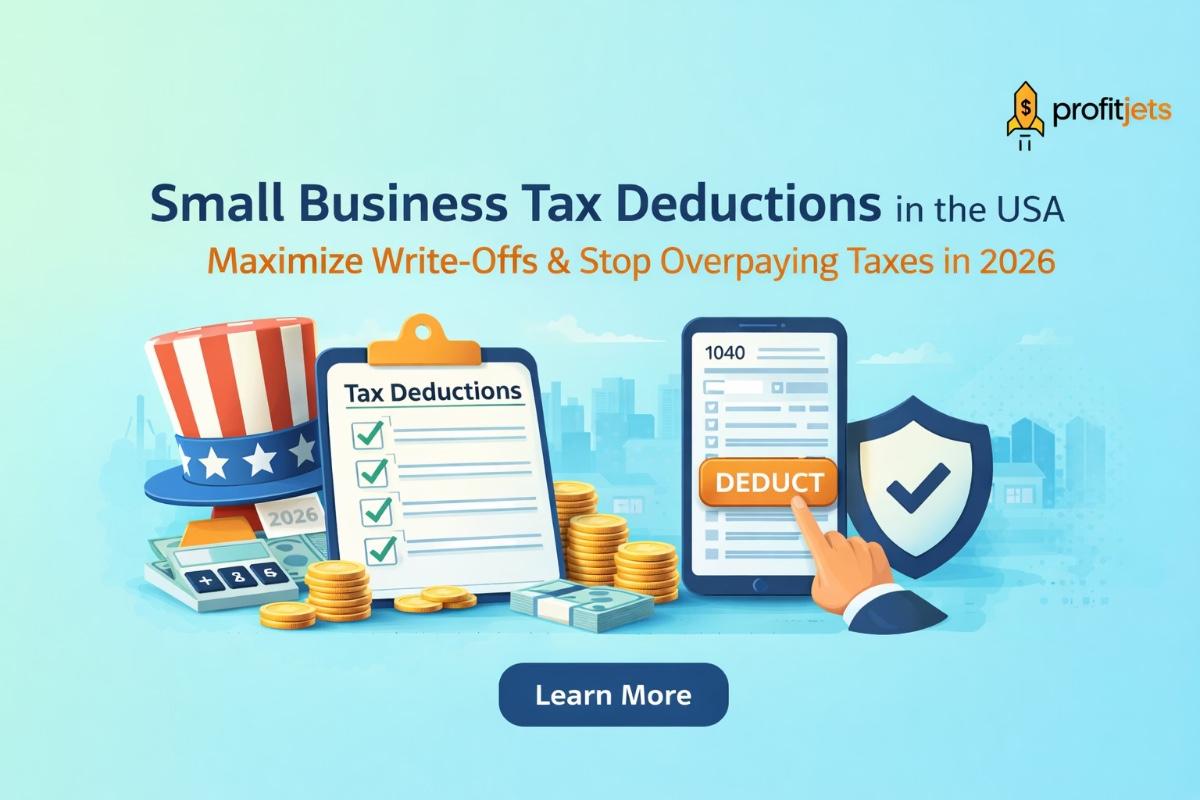
Small business tax deductions allow U.S. business owners to legally reduce taxable income by deducting qualified business expenses such as rent, payroll, marketing, software, home office costs, and equipment purchases. If you operate as a sole proprietor, LLC, S corporation, or partnership, you can claim eligible write-offs to lower your federal tax bill in 2026.
The key is understanding what expenses are tax deductible for small businesses and maintaining proper documentation. Many entrepreneurs overpay taxes simply because they miss common small business tax write-offs or misunderstand IRS rules. By using a structured small business tax deductions checklist and applying strategies like Section 179 expensing, vehicle deductions, and home office calculations, you can significantly reduce your liability.
In this guide, we break down exactly how to maximize small business tax deductions while staying compliant with U.S. tax regulations
What Are Small Business Tax Deductions?
Small business tax deductions are ordinary and necessary expenses incurred while operating your business. The IRS defines deductible expenses as costs that are common in your industry and helpful for running your business.
Examples of Common Small Business Tax Write-Offs
- Office rent and utilities
- Employee wages and contractor payments
- Business insurance premiums
- Marketing and advertising expenses
- Accounting and legal fees
- Software subscriptions
- Office supplies
Understanding common small business tax write-offs ensures you don’t leave money on the table.
What Expenses Are Tax Deductible for Small Businesses?
If you’re wondering what expenses are tax deductible for small businesses, here are the most impactful categories:
Startup Business Tax Deductions
New businesses can deduct up to $5,000 in startup costs and $5,000 in organizational expenses in the first year, subject to limits. These may include:
- Market research
- Legal formation costs
- Website development
- Initial advertising
Startup business tax deductions help reduce early-stage financial pressure.
Home Office Tax Deduction Rules
If you use part of your home exclusively and regularly for business, you may qualify under home office tax deduction rules. You can calculate deductions using:
- Simplified method ($5 per square foot, up to 300 sq. ft.)
- Actual expense method (percentage of rent, utilities, internet, etc.)
This is one of the most overlooked self-employed business tax deductions.
Vehicle Expense Deduction for Business Use
If you use a car for business, you may claim the vehicle expense deduction for business use using:
- Standard mileage rate method
- Actual expenses method
Keep mileage logs and expense records to stay compliant.
LLC Tax Deductions for Small Businesses
LLC tax deductions for small businesses generally follow pass-through taxation rules unless the LLC elects corporate taxation. Deductible expenses include:
- Operating expenses
- Employee benefits
- Retirement contributions
- Health insurance premiums
Multi-member LLCs file partnership returns, while single-member LLCs typically report on Schedule C. Strategic planning can help maximize small business tax deductions depending on your entity type.
Section 179 Deduction for Small Businesses
Eligible purchases may include:
- Machinery
- Office furniture
- Computers and technology
- Business vehicles (subject to limits)
This provision is a powerful way to reduce taxable income in high-profit years.
Self-Employed Business Tax Deductions
Freelancers and sole proprietors can benefit from several self-employed business tax deductions, including:
- Self-employed health insurance
- Retirement plan contributions (SEP-IRA, Solo 401(k))
- Half of self-employment tax
- Education and training expenses
Proper documentation ensures you maximize small business tax deductions without triggering IRS scrutiny.
Small Business Tax Deductions Checklist for 2026
Use this simplified small business tax deductions checklist to stay organized:
- Track all income and expenses monthly
- Separate personal and business accounts
- Maintain digital copies of receipts
- Log vehicle mileage
- Document home office measurements
- Review quarterly estimated taxes
- Evaluate Section 179 purchases before year-end
A proactive system reduces audit risk and improves cash flow planning.
How to Maximize Small Business Tax Deductions
To legally reduce taxes in 2026:
1. Plan Before Year-End
Review profits in Q3 or Q4 to identify deduction opportunities.
2. Accelerate Expenses
Prepay certain expenses or invest in equipment strategically.
3. Contribute to Retirement
Retirement contributions reduce taxable income while building wealth.
4. Work With a Tax Professional
Tax laws change frequently. Expert guidance ensures compliance and optimization.
When executed properly, small business tax deductions become a strategic growth tool rather than just a compliance requirement.
Common Mistakes That Cause Overpayment
- Mixing personal and business expenses
- Missing documentation
- Ignoring home office eligibility
- Not claiming depreciation correctly
- Failing to track startup expenses
Avoiding these errors helps you stop overpaying taxes legally.
Why Professional Tax Guidance Matters
Tax planning is different from tax filing. Many business owners focus only on filing deadlines, but proactive planning identifies opportunities to maximize small business tax deductions throughout the year.
If you want expert support tailored to your entity type and revenue level:
At Profitjets, we help U.S. small businesses reduce tax burdens while staying fully compliant.
FAQs
Q1. What are the most common small business tax deductions in the USA?
The most common small business tax deductions include rent, payroll, marketing expenses, software subscriptions, home office expenses, vehicle mileage, and equipment purchases under Section 179.
Q2. Can I claim a home office deduction if I work remotely?
Yes. You can claim it if the space is used exclusively and regularly for business. You may use the simplified method or actual expense calculation under IRS guidelines.
Q3. Are LLC owners eligible for the same deductions as sole proprietors?
Generally, yes. LLC tax deductions for small businesses include operating costs, health insurance, retirement contributions, and equipment purchases, depending on tax classification.
Q4. How does Section 179 help reduce taxes?
Section 179 allows you to deduct the full cost of qualifying equipment in the same year it’s purchased instead of depreciating it over multiple years, lowering taxable income immediately.
Q5. How can I maximize small business tax deductions legally?
Maintain accurate records, review finances quarterly, leverage retirement contributions, use a structured checklist, and work with a professional tax advisor for strategic planning.
If you’re ready to reduce your 2026 tax bill and stop overpaying, connect with our experts today.
Contact us for reduce your 2026 tax bill and stop overpaying