
Every filing season produces the same question in the same week: where is the refund, and is it late.
Published schedules give a range because the timing depends on facts specific to your return rather than on the calendar. How you filed, which credits you claimed, and whether anything disagrees with what third parties reported all move it.
This covers how the season runs, the hold that applies to certain credits, what timing is typical for electronic and paper filing, the common causes of delay, and how to track your own position.
2026 Filing Season Overview
The 2026 filing season (for 2025 tax year returns) typically opens in late January 2026 when the IRS begins accepting e-filed returns. The standard deadline is April 15, 2026. E-filed returns with direct deposit are generally processed within 21 days.
The one thing genuinely within your control is filing a return that does not need querying. Figures that disagree with what employers, banks or platforms reported are a common cause of a hold, and checking those documents against the return is worth more than filing a few days earlier.
Anu Gupta, CA, EA, B.Tech · LinkedInPATH Act Hold: EITC and Child Tax Credit Filers
The Protecting Americans from Tax Hikes (PATH) Act requires the IRS to hold refunds for filers claiming the Earned Income Tax Credit (EITC) or Additional Child Tax Credit (ACTC) until at least February 15. Even if you file on day one of the filing season, your refund will not be issued before mid-February.
These refunds typically arrive in bank accounts in late February for early filers.
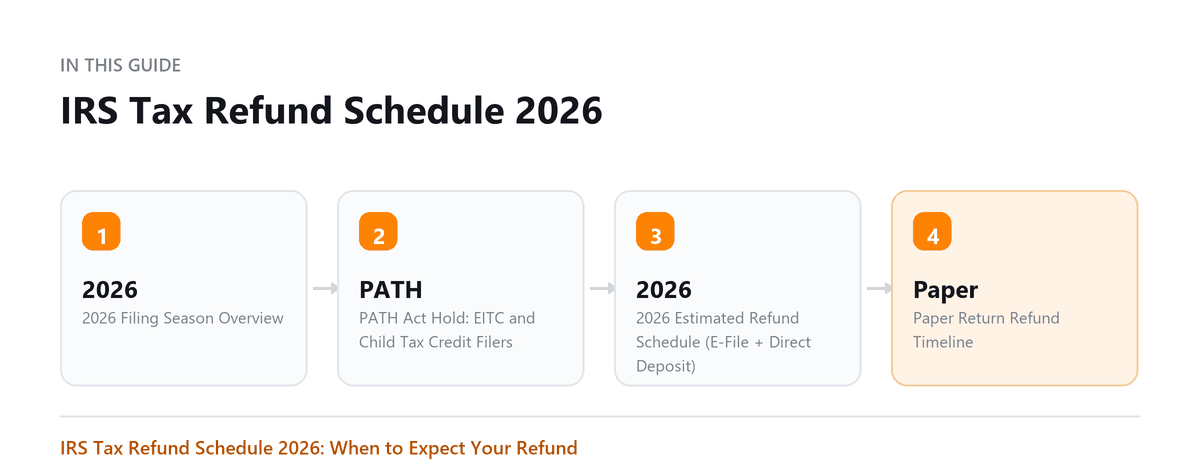
2026 Estimated Refund Schedule (E-File + Direct Deposit)
| IRS Acceptance Date | Estimated Direct Deposit Date |
|---|---|
| January 27 - February 2 | February 17 - February 23 |
| February 3 - February 9 | February 24 - March 2 |
| February 10 - February 16 | March 3 - March 9 |
| February 17 - February 23 | March 10 - March 16 |
| February 24 - March 2 | March 17 - March 23 |
| March 3 - March 9 | March 24 - March 30 |
| March 10 - March 16 | March 31 - April 6 |
| March 17 - April 15 | Approximately 21 days from acceptance |
Paper Return Refund Timeline
Paper (mailed) returns take significantly longer:
- Standard processing: 6-8 weeks from the date the IRS receives the return
- During peak periods: can extend to 10-12 weeks
- Paper returns with errors or missing forms: additional processing time
Common Reasons for Refund Delays
| Cause | Typical Additional Delay |
|---|---|
| PATH Act hold (EITC/ACTC) | Held until February 15 minimum |
| Identity verification letter (5071C) | 2-9 weeks after verification |
| Math error on return | 2-4 weeks for IRS correction |
| Amended return filed | 16-20+ weeks |
| Incomplete return (missing forms) | 4-8 weeks |
| Bankruptcy filing | Weeks to months |
| Prior-year debt offset (student loans, child support) | No delay for remaining refund after offset |
| IRS staffing and processing backlogs | Varies by year |
Tracking Your 2026 Refund
Use IRS 'Where's My Refund' at IRS.gov or the IRS2Go mobile app. You need your SSN, filing status, and exact refund dollar amount.
Pro Tip: File early (but not before you have all documents), e-file, and choose direct deposit. This combination gives you the fastest refund and reduces the chance of someone filing a fraudulent return using your SSN.
Book a free consultation and we will take the return off your desk.
Frequently Asked Questions
Why is my refund taking more than 21 days?
There are many reasons: PATH Act hold, identity verification, manual review, or a simple processing backlog. After 21 days from e-filing, you can call the IRS at 800-829-1040 to inquire.
Do IRS staffing cuts affect refund timing?
IRS staffing and budget affect processing capacity. During periods of reduced staffing or high filing volume, processing times can extend beyond the typical 21 days. The IRS publishes operational status updates on IRS.gov.
Can I get my refund faster than 21 days?
21 days is already the standard fast timeline for e-file plus direct deposit. There is no way to get a refund faster from the IRS itself. Be wary of refund anticipation loan (RAL) offers from tax preparers, they come with fees.
Why do published schedules only ever give a range?
Because the date depends on facts specific to your return rather than on the calendar. How you filed, whether the return was selected for additional checks, whether certain credits are claimed, and whether anything on it disagrees with information reported by a third party all move the timing. A published schedule describes the typical case; the tracking tool describes yours, and it is the one to rely on.
What actually helps a refund arrive sooner?
Filing electronically, choosing direct deposit, and filing a return that does not need to be queried. The third is the one within your control and the one most often overlooked: figures that disagree with what employers, banks or platforms reported are a common cause of a hold. Checking those documents against the return before submitting is worth more than filing a few days earlier.

Written by
Anu Gupta, CA, EA, B.Tech
Anu works with US businesses on tax and entity questions at Profitjets, from choosing a structure to the filings that follow it. She writes about the decisions owners make once and then live with for years. Connect on LinkedIn
Free consultation
Want the Filing Handled?
Book a free consultation and we will take the return off your desk.