
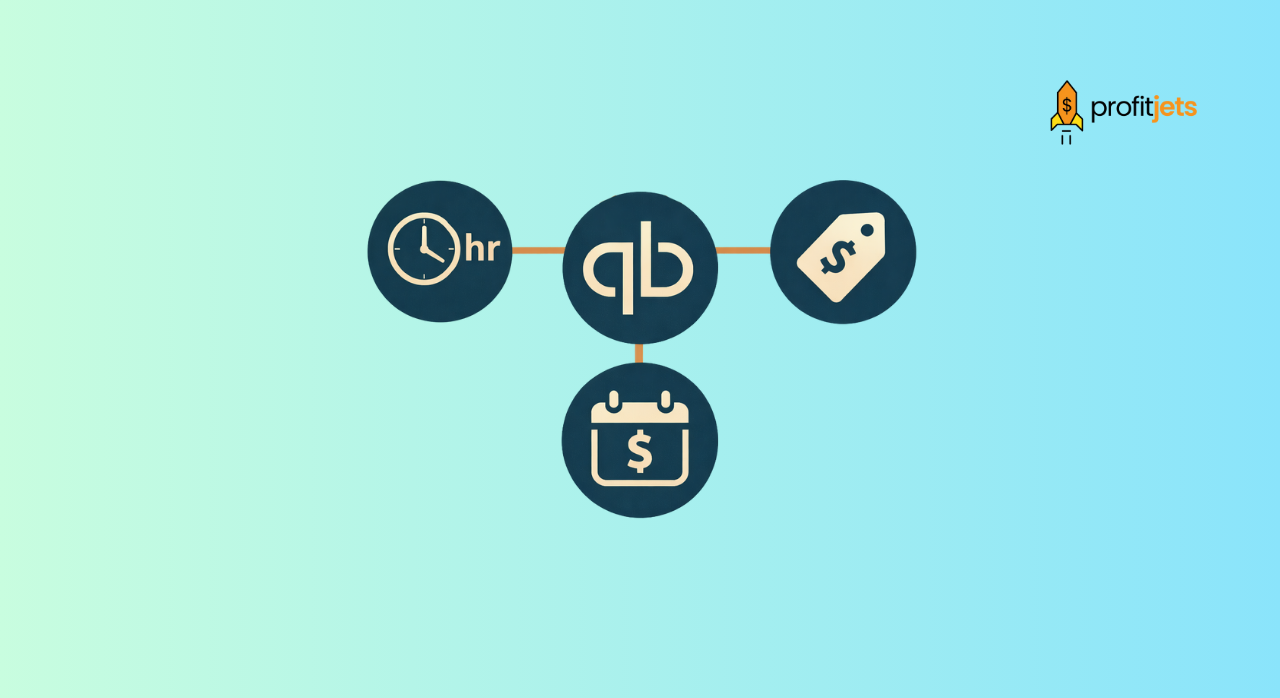
When evaluating QuickBooks bookkeeping services, it’s crucial to understand how providers price their work. Bookkeeping costs can vary widely based on the pricing model you choose and whether you hire locally or outsource internationally. In this guide, we’ll break down the typical pricing structures – hourly rates, fixed fees, and monthly packages – and provide specific pricing ranges for both the US and Indian markets. We’ll also compare the pros and cons of each model and discuss what factors influence pricing. This will help you, as a time-strapped startup founder, make an informed decision that fits your budget and needs.
Hourly Bookkeeping Rates (Pay-As-You-Go)
Hourly pricing means you pay a bookkeeper or QuickBooks expert for the actual time they work on your accounts. This model is straightforward: if they work 10 hours, you pay for 10 hours. Hourly billing is common for freelance bookkeepers or part-time arrangements, offering flexibility, especially when your bookkeeping needs vary month to month.
Typical Hourly Rates (US): In the United States, bookkeeping hourly rates can range widely based on experience and location. Standard bookkeepers often charge around $25–$75 per hour. Highly certified QuickBooks ProAdvisors or accountants may charge more – commonly $50 to $150 per hour for their expertise. (The average hourly wage for a basic bookkeeper in the US is about $22–$23, but service rates are usually higher to cover business overheads and profit.)
Typical Hourly Rates (India/Outsourcing): Many startups turn to outsourced bookkeeping for cost savings. Providers in countries like India offer skilled QuickBooks bookkeeping at lower hourly rates. It’s not uncommon to see rates around $10 to $20 per hour for offshore bookkeepers[1]. In fact, some Indian outsourcing firms advertise QuickBooks experts starting at $7- $10 per hour, reflecting lower operating costs. In local terms, Indian freelance bookkeepers might charge roughly ₹500 to ₹1,500 per hour for standard bookkeeping work, though this can vary with experience and city.
When Hourly Makes Sense
An hourly model is ideal if you have a smaller, variable workload or need occasional help (e.g., during end-of-month crunch or tax season). You only pay for the time used, which can be cost-effective for basic QuickBooks bookkeeping tasks that don’t require constant attention. It offers flexibility – you can scale hours up or down easily. For example, if one month is quiet, you pay less, and if another month is busy, you can increase the hours as needed.
However, consider the trade-offs: Hourly billing can make monthly costs unpredictable, which may be tricky for budgeting. If your bookkeeper takes longer than expected on tasks, the bill increases accordingly. Additionally, you’ll need to ensure the bookkeeper is efficient and honest with time-tracking; accurately tracking hours is important. Some founders also find that hourly arrangements put the onus on them to define tasks clearly; otherwise, hours can rack up with little to show.
Example: A U.S. startup might hire a freelance QuickBooks bookkeeper at $30/hour for 10 hours a month, costing about $300. In contrast, outsourcing to an Indian firm at $15/hour could cost only $150 for the same 10 hours – a significant saving[1]. But if your bookkeeping needs jump to 40 hours in a busy period, your costs would jump accordingly under the hourly model.
Fixed-Rate (Project-Based or Flat Fee) Services
Fixed-rate pricing means you pay a predetermined fee for a defined service or time period, regardless of the hours actually spent. This model is common for clearly scoped tasks or one-time projects. In bookkeeping, a fixed fee might apply to a specific project (like setting up QuickBooks for your company, cleaning up backlogged books, or preparing financial statements for the year). It can also apply to an agreed monthly rate for a consistent workload (overlapping with the concept of monthly packages, which we’ll cover next).
Typical Fixed Fees for Projects: QuickBooks service providers often quote flat fees for distinct jobs. For instance, setting up QuickBooks for a new business (configuring the chart of accounts, integrating bank feeds, etc.) might cost around $300 to $1,000 as a one-time fee. A thorough cleanup of messy books or catch-up bookkeeping (say you haven’t updated accounts for months) could be priced around $750 to $3,000 (project rate) depending on how behind your books are. These ranges can vary – a simple setup for a tiny startup may be at the low end, whereas a multi-year cleanup with complex transactions will be at the high end or beyond.
Fixed Monthly Retainers: Sometimes, a bookkeeper will agree to a fixed monthly fee to handle your bookkeeping on an ongoing basis (this overlaps with the “monthly package” idea). For example, a provider might charge a flat $500 per month to handle all bookkeeping for a small business with modest activity. The fee is fixed, so even if they spend slightly more or fewer hours, you pay the same amount, providing cost certainty. (Often, the scope will be defined – e.g. up to X transactions, one bank account reconciliation, basic reports, etc., for that fixed fee.)
Pros of Fixed Pricing
The biggest benefit is predictability. You know upfront how much the service will cost, which is great for budgeting. Fixed fees are often used for well-defined outcomes – for instance, “Set up my QuickBooks and clean last year’s records for $1,000.” This clarity can be reassuring: both you and the provider agree on what’s included for that price. It also shifts the risk to the service provider, if they underestimate the work, they still have to complete it without charging extra (assuming the scope doesn’t change). For startups, a fixed project fee can be useful to control costs for specific tasks like systems setup or year-end accounting.
Cons of Fixed Pricing
The challenge is making sure the scope is crystal clear. If your needs creep beyond the original agreement, you might face additional charges or a re-negotiation. Providers often put limits in writing (e.g. “up to 200 transactions” or “up to 5 hours of meetings included”) – if you exceed those, the fixed fee might no longer apply. Also, to cover uncertainty, a provider may quote a higher fee “just in case,” meaning potentially you pay a premium over the actual hours incurred. In other words, if a bookkeeper thinks a task will take 8–12 hours, they might charge for 12 hours upfront to be safe. If they finish in 8, you still paid for 12. Thus, while you avoid surprises, you might not get a refund for efficiency gains.
That said, many startups find fixed fees worthwhile for the peace of mind and time saved in not having to micromanage hours. It’s especially handy for one-off needs. For example, you could agree on a flat fee to get your books investor-ready before a fundraising round – no matter how many hours it takes, you’ll pay the agreed amount and get the job done.
Monthly Bookkeeping Packages (Subscription Model)
Monthly packages are a popular option for ongoing bookkeeping needs. In this model, you pay a set monthly rate and receive a bundle of bookkeeping services each month. It’s akin to a subscription or retainer: the bookkeeping firm will handle specified tasks every month (transactions, reconciliations, reports, etc.), often with tiered packages to choose from (basic, advanced, etc.). This is common with outsourced bookkeeping firms and services like QuickBooks Live, Bench, or Profitjets’ own service offerings.
Typical Monthly Package Costs (US): For small businesses in the U.S., outsourced bookkeeping packages usually start around a few hundred dollars per month. A basic package (for a low-volume startup with simple needs) might be $300 – $500 per month, which covers essentials like transaction entry and bank reconciliation. As your needs grow, more comprehensive packages (including managing accounts receivable/payable, payroll, or more frequent reporting) might range from $800 up to $1,500 per month for many mid-sized small businesses. Full-service bookkeeping (with everything included, possibly weekly support or CFO insights) can go higher, even above $1,500/month for larger or complex businesses. For example, Intuit’s QuickBooks Live (a popular online bookkeeping service) charges roughly $300 to $700 per month depending on your company’s monthly expenses (smaller businesses on the lower end, larger on the higher). This gives a sense of how costs scale with business size.
Typical Monthly Packages (India/Offshore): If you outsource to an Indian bookkeeping firm, the monthly rates can be substantially lower for comparable service levels, thanks to lower labor costs. Many Indian firms offer tiered monthly plans; for instance, one well-known provider’s plans start at around $650 per month (about ₹55,000) for a full-service package suitable for international clients. However, for smaller startups or partial services, costs can be much less. Profitjets notes that basic bookkeeping services, when outsourced internationally, might range roughly ₹5,000 to ₹50,000 per month, which is about $60 to $600+ USD. In other words, an early-stage startup could potentially get a simple monthly bookkeeping package from an offshore team for just $100–$200 per month (for minimal needs), whereas a more established small business with higher volume might pay closer to $500/month, still a bargain by U.S. standards. It’s important to compare what’s included in these packages (some ultra-low-cost packages might limit the number of transactions or exclude certain tasks).
Why Choose a Monthly Package
This model is great for ongoing, steady bookkeeping where you want a predictable expense and a provider who continuously keeps your books current. It essentially outsources the entire bookkeeping function for a set price. Busy founders appreciate not having to think about hours or small add-on fees; everything is covered in one monthly rate. It also fosters a long-term relationship; the bookkeeper or firm gets to know your business and can often provide value-added insights over time (e.g., spotting trends in your finances), rather than just performing a one-time task. Many providers will scale your plan as you grow, which is convenient; you can start with a basic package and upgrade when needed.
Be Mindful of Package Details: With fixed monthly plans, it’s important to understand the package limits. Check if there’s a maximum number of transactions or accounts included. For instance, a basic plan might cap at 100 transactions or exclude payroll processing, whereas a higher plan covers more. If your startup is growing, ensure you know at what point you’d need to jump to the next tier (and what that costs). Another consideration is that in slow months you’ll still pay the full fee, so you’re somewhat pre-paying for availability. However, many businesses find that the consistency is worth it for avoiding lapses in their financial records.
Did You Know? According to industry data, small businesses can expect to pay roughly $500 to $2,500 per month on average for outsourced bookkeeping services. The low end represents a lean operation or outsourcing offshore, while the high end is for more complex needs or U.S. providers. In one Profitjets report, basic bookkeeping in the U.S. might cost $300–$800/month, whereas the same handled in India could be ₹5,000 – ₹50,000 (₹ means Indian rupees). This highlights the cost advantage of outsourcing for comparable work. Of course, price is only one factor – quality, trust, and communication are also key when choosing a provider.
Pros and Cons of Hourly vs. Fixed vs. Monthly Pricing
Every pricing model has its advantages and drawbacks. Below is a comparison table summarizing the pros and cons of hourly, fixed-rate, and monthly package pricing for QuickBooks bookkeeping:
| Pricing Model | Pros | Cons |
| Hourly (Pay-Per-Hour) | Pay only for what you use; flexible scaling month to month; no long-term commitment; cost-effective for very low-volume needs | Unpredictable monthly costs; higher bills if tasks take longer; requires time tracking and oversight |
| Fixed Fee (Project-Based) | Predictable pricing; clear scope and deliverables; good for budgeting one-time projects | Scope changes can increase cost; may include buffer pricing; less flexible mid-project |
| Monthly Package (Recurring) | Consistent monthly cost; comprehensive ongoing service; long-term partnership and better financial visibility | Paying even during slow months; tier upgrades as business grows; less short-term flexibility |
(As the table shows, hourly offers flexibility but less certainty, fixed fees give certainty but need clear scope, and monthly plans offer full service with predictable costs but on a use-it-or-not basis.)
Factors That Influence QuickBooks Bookkeeping Pricing
Whether you opt for hourly, fixed, or monthly, several key factors will influence the price you pay for QuickBooks bookkeeping services. Understanding these can help you anticipate costs or negotiate a suitable arrangement:
Volume of Transactions: The number of transactions you have each month is a major cost driver. A business with hundreds of transactions (sales, expenses, bank entries) will require more bookkeeping time than one with a few dozen. Higher volume = higher cost. For instance, reconciling 5 bank transactions is far quicker than reconciling 500. Many service packages are tiered by transaction count for this reason.
Scope of Services Required: What tasks are you including in bookkeeping? Basic bookkeeping (recording transactions and reconciling accounts) is the least expensive level. If you need additional services like payroll processing, invoice management, handling accounts payable/receivable, inventory tracking, or tax preparation, the fees will increase. Each added service (e.g., managing payroll) adds to the workload and often requires more expertise, which providers charge for accordingly.
Complexity of Your Finances: The complexity of your finances matters. If you have multiple revenue streams, operate in different currencies, or manage a product inventory, bookkeeping will be more complex than for a simple single-product business. Certain industries (like ecommerce, construction, or restaurants) have more complex bookkeeping needs (inventory, job costing, tip tracking, etc.). Complexity often means the bookkeeper needs more time or specialized knowledge, affecting price.
Experience and Credentials of the Bookkeeper: A highly experienced bookkeeper or a certified QuickBooks ProAdvisor may charge higher rates than a junior bookkeeper. You’re paying for expertise and assurance. For example, a certified ProAdvisor in the U.S. might command $100/hour, whereas a less experienced freelancer might charge $25/hour. Similarly, in India, a seasoned chartered accountant might quote a higher monthly fee than a small bookkeeping agency. While you pay more for experience, the benefit is often greater accuracy and insight – an experienced professional might spot issues or optimize your processes, adding value beyond data entry.
Geographic Location of Service: Location plays a role even in today’s online world. Bookkeepers in high-cost-of-living areas (e.g., New York or San Francisco) charge more to cover their costs. On the other hand, outsourcing to a region with lower costs (like India or other countries) can significantly reduce the rate for equivalent work. That’s why outsourced bookkeeping rates are often lower, you’re arbitraging the difference in living costs. Even within the same country, urban centers might be pricier than rural areas. The rise of cloud accounting means you can hire talent from anywhere, so many startups take advantage of this to find the right balance of cost and quality.
Frequency and Duration of Engagement: One-off projects may be priced differently from ongoing engagements. Often, if you commit to a monthly retainer, the effective hourly rate might be discounted versus sporadic work. For example, hiring a bookkeeper for a single month of cleanup could cost more (per hour) than a 12-month contract where they handle your books continuously. Long-term clients might get better rates or package deals. Conversely, if you only need a quick consultation or a quarterly review, you might pay a premium hourly rate for that short engagement.
Software and Technology: This is a smaller factor, but if the service includes your QuickBooks Online subscription fee, that could be built into the price. Some bookkeeping firms provide a “free” QuickBooks license as part of their package and just roll the cost in. Also, if you require integration with other software or advanced reporting tools, there might be extra setup or app subscription costs. Generally, the cost of QuickBooks software itself (which can be $30–$200/month depending on plan) might be separate, but it’s worth clarifying with your provider.
In short, the more work and expertise required, the higher the price. A tiny startup with one bank account and no employees will pay far less than a growing company with multiple accounts, payroll, and inventory. It’s wise to discuss these factors with any prospective bookkeeping service so you get an accurate quote. Reputable firms will often ask you about your transaction volumes, business complexity, and what you need done – this helps them recommend the right pricing model and level of service.
Choosing the Right Pricing Model for Your Startup
How do you decide which pricing model is best for your situation? It depends on your priorities:
If cost flexibility and minimizing expenses month-to-month are your top concerns (and you have the time to monitor the work), an hourly arrangement might work. This is often suitable for early-stage startups with tight budgets and sporadic bookkeeping tasks. Just be prepared for some variance in billing and keep communication open with your bookkeeper about expected hours.
If you have a clearly defined project or a one-time need, a fixed fee gives peace of mind. For example, converting your accounts from spreadsheets to QuickBooks or catching up on a backlog of transactions are perfect candidates for project-based pricing. Make sure to define the deliverables and timeline. Fixed pricing can also work for a consistent monthly scope if you and the provider prefer a flat rate (essentially treating it like a recurring fixed package).
If you prefer full coverage and predictability, a monthly package is often the best choice. This suits busy founders who want to essentially “set it and forget it” – you outsource the entire bookkeeping function. You’ll know exactly what you’re paying each month, which investors and budget-conscious founders appreciate. As long as your business is operating (generating transactions every month), having a monthly service ensures nothing falls through the cracks. It’s a bit like having an external finance department on call. Many startups graduate to this model as they grow and their accounting needs become continuous.
Also consider a combination: you might do a one-time fixed-price cleanup, then move into a monthly maintenance package. Or you might start hourly, and once the hours become regular enough, switch to a fixed monthly fee for simplicity.
Importantly, evaluate the provider as much as the price model. The right partner will be transparent about pricing and will help you find the model that makes sense for you. For instance, if you’re unsure how much help you need, a good bookkeeping service might start hourly for a couple of months and then suggest a fixed monthly plan based on the observed workload, effectively giving you a trial run.
The Value of Outsourcing to a Firm Like Profitjets
Whether you’re in the US or India, outsourcing your bookkeeping to a professional firm can add significant value beyond just the price tag. Profitjets, for example, is a full-service accounting firm that caters to businesses in both the USA and India, and understands the unique needs of startups. By outsourcing to a team like Profitjets, you gain access to experienced bookkeepers and financial advisors who are fluent in QuickBooks and compliance requirements.
One major advantage is flexibility in pricing and services. Profitjets can accommodate different models, hourly support for short-term needs, or flat monthly packages tailored to your startup’s size and industry. This means you’re not forced into a one-size-fits-all plan. As your business grows, the services can scale with you (and pricing adjusts transparently, so you’re always clear on what you’ll pay). The focus is on providing value: accurate books, delivered on time, with insights that help your business.
Moreover, outsourcing to a firm like Profitjets comes with expert oversight. Instead of one freelance bookkeeper, you get a team backing your account. This built-in review process can improve accuracy and ensure continuity (for example, if one team member is on leave, someone else can step in – your bookkeeping doesn’t pause). Profitjets emphasizes “financial clarity and control” for startups, aligning with the idea that clarity builds trust in financial reporting. By maintaining clean books, you, as a founder, get peace of mind and can confidently share figures with investors or advisors.
Finally, consider the cost-benefit beyond the hourly rate: your time saved. Founders often spend dozens of hours on bookkeeping if they do it themselves – time that could be spent on product, customers, or strategy. By outsourcing, you free up time and ensure specialists handle the work. As Profitjets highlights in their approach, startups gain a dedicated partner in the business’s success, not just an expense. The right firm will actively help streamline your finances, suggest improvements, and keep you ready for key decisions (like fundraising or audits).
In summary, while this article has focused on pricing models and numbers, don’t forget the big picture: outsourcing bookkeeping is about adding expertise to your team in a cost-efficient way. A firm like Profitjets can deliver value under any pricing model by providing reliable service and financial insight, which is often worth far more than the fees on paper.
Conclusion
Understanding typical pricing for QuickBooks bookkeeping services helps you choose the best option for your startup. To recap, hourly rates give flexibility and are commonly between ~$25–$75/hour in the US (even lower if outsourced abroad), whereas fixed fees offer predictability for defined projects (e.g., a QuickBooks setup for $500). Many growing businesses opt for monthly packages, paying perhaps a few hundred dollars a month for ongoing bookkeeping support (significantly less if using offshore services). Each model has its pros and cons: hourly can vary in cost, fixed pricing requires a clear scope, and monthly packages require a steady commitment.
The India vs US perspective is also important. U.S. startups might pay a premium for local bookkeepers, but can save by outsourcing to qualified professionals in India. Indian startups, on the other hand, often benefit from local rates (which are lower in absolute dollars) while still leveraging QuickBooks expertise. In all cases, focus on the value delivered: accurate books, time saved, and better financial visibility.
Before deciding, evaluate your business’s complexity, transaction load, and budget tolerance for variability. It often helps to get quotes for different models; many providers will offer a free consultation or estimate. Compare what’s included in each quote (hours, services, reports, support level). Also, consider your preferences: do you want to manage closely (hourly) or set a flat rate and not worry about it (fixed/package)?
Ultimately, the right pricing model is the one that aligns with your operational needs and gives you peace of mind. With clear records and the support of a capable bookkeeping service, you’ll be free to concentrate on growth. And remember, you don’t have to navigate this alone; firms like Profitjets are ready to guide you through the options and craft a solution that makes financial sense for your startup. With the right partner and pricing plan, outsourced QuickBooks bookkeeping becomes not just a cost, but an investment in your business’s stability and success.
FAQs
How much does QuickBooks bookkeeping usually cost per month?
QuickBooks bookkeeping costs depend on transaction volume, complexity, and service scope. For early-stage startups, monthly costs usually start from a few hundred dollars and increase as reporting, payroll, and compliance needs grow. Many founders prefer monthly packages because they offer predictable pricing and consistent support.
Is hourly or monthly bookkeeping better for startups?
Hourly bookkeeping works well for very early-stage startups with irregular activity. Monthly bookkeeping packages are better once transactions become regular and reporting expectations increase. Most growing startups move to monthly pricing to avoid fluctuating bills and to maintain cleaner, more reliable books.
Why do bookkeeping prices vary so much between providers?
Bookkeeping pricing varies based on experience level, service depth, location, and accountability. Lower prices often cover only basic data entry, while higher-quality providers include reconciliations, reviews, reporting, and proactive issue handling. Firms like Profitjets focus on structured delivery and ownership rather than just logging hours.
Does outsourced QuickBooks bookkeeping cost less than hiring in-house?
Yes. Outsourced QuickBooks bookkeeping is typically more cost-effective than hiring a full-time employee. You avoid fixed salaries, benefits, and training time while gaining access to experienced professionals who work across multiple startups and systems.
What is usually included in a monthly QuickBooks bookkeeping package?
A monthly package typically includes transaction categorization, bank and credit card reconciliations, monthly financial statements, and ongoing review for accuracy. More advanced packages may also cover payroll coordination, accounts receivable tracking, and founder-ready reporting, depending on the business stage.