
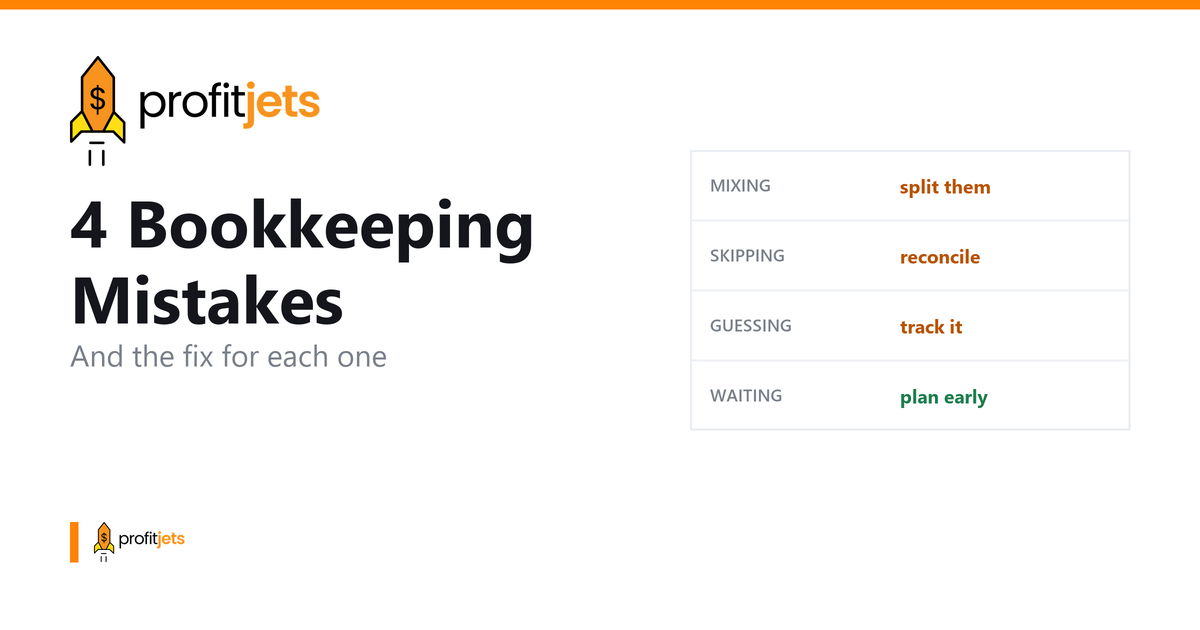
Bookkeeping is an essential function for businesses across distinct sizes but it still gets deferred. While juggling between operations, satisfying customer needs and business growth, most of the business owners handle bookkeeping as they can refine it in the later phase when it is required. But even a small mistake at present compounds to a pitfall in the future which no one paid attention to. This leads to inconsistencies in financial records compromising standards and accuracy which eventually leads to Ad-hoc decisions rather than strategic for long-term.
When business owners are wearing multiple hats, they often tend to make the following errors in bookkeeping. This article explains the preventenable ones and the correct financial discipline if you're currently dealing with this situation. By resolving the issues early businesses can save unnecessary cash burn in the long run.
Most bookkeeping mistakes are not about knowledge, they are about habits. The businesses that get into trouble are the ones that let things slide for months, then try to fix everything at once. The fix is usually a system change, not just a clean-up.
Ankit Sarawagi, CPA, CA, MBA · LinkedInMistake 1: Mixing Personal and Business Finances
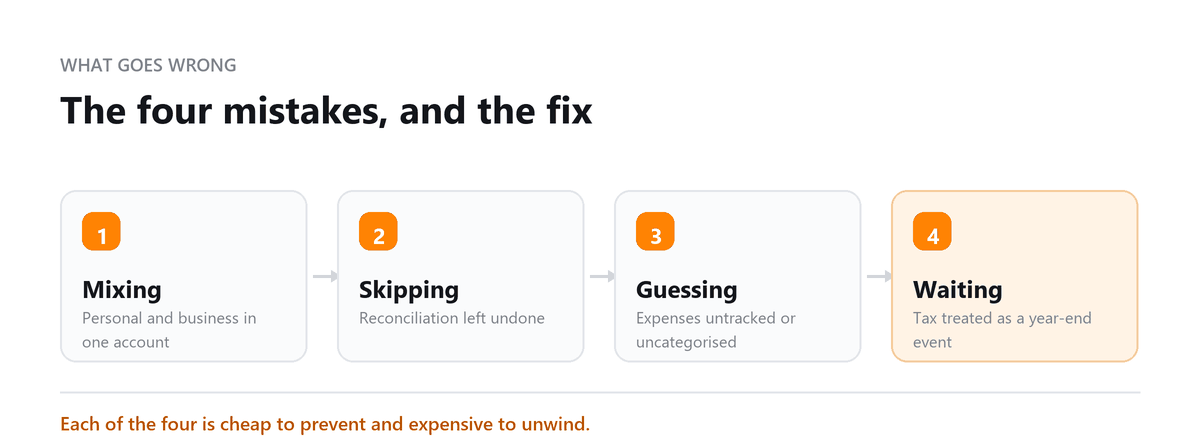
One of the most common and most damaging bookkeeping mistakes is using a personal bank account or credit card for business transactions. When personal and business finances are mixed, it becomes nearly impossible to produce accurate financial statements, track business expenses, or prepare reliable tax returns. It also creates significant liability risk.
The fix is simple: open a dedicated business bank account and business credit card from day one, and use them exclusively for business transactions. If mixing has already occurred, a bookkeeper can help untangle the records, but it is time-consuming and costly.
Mistake 2: Failing to Reconcile Bank Accounts Regularly
Bank reconciliation is the process of matching your internal records against your bank statements to confirm they are accurate. Many small business owners skip this step or do it only at tax time leaving errors, duplicate entries, and missed transactions to accumulate undetected.
Reconciling monthly (or weekly for higher-volume businesses) catches discrepancies early, prevents fraud, and ensures your financial reports accurately reflect reality. Most accounting software makes this process straightforward once bank feeds are connected.
Mistake 3: Not Tracking Business Expenses Consistently
Missing expense records means missing tax deductions and potentially understating your true business costs. This often happens when receipts are not captured immediately, when cash expenses go unrecorded, or when business expenses are paid from personal accounts.
Use accounting software with receipt capture capabilities (most modern platforms have a mobile app for this) and establish a habit of recording every expense at the point of purchase. The difference between well-tracked and poorly tracked expenses is often thousands of dollars at tax time.
Mistake 4: Treating Tax as a Year-End Event
Many small business owners only think about tax when a deadline is approaching. This reactive approach leads to rushed record reviews, missed deductions, and avoidable penalties. Tax obligations from quarterly estimated payments to payroll tax filings, require year-round attention.
The solution is to set aside a percentage of every payment received for tax, track deductible expenses consistently throughout the year, and schedule a quarterly review with your bookkeeper or accountant to stay ahead of what you owe.
Whenever we are onboarding a client at Profitjets, we conduct an extensive analysis of their data in the books. More often we end up finding atleast 2 of the 4 above mentioned issues surfacing across businesses. It often leads to compliance problems with the inconsistency but structuring a clean system will help neglect the challenges. While the issues are mostly preventable but detecting them earlier will help resolve the businesses to retain their working capital toward business growth.
Book a free consultation and we will tell you what it takes to put them right.
Frequently Asked Questions
What is the most common bookkeeping mistake small businesses make?
Mixing personal and business finances is the single most common error. It creates reporting inaccuracies, tax complications, and liability exposure that are expensive and time-consuming to fix. Opening a dedicated business account from the start is the simplest preventive measure.
How do I fix bookkeeping mistakes I have already made?
The process depends on how far back and how extensive the errors are. For recent issues, a careful review and correction of specific entries may be sufficient. For significant historical errors, a catch-up bookkeeping engagement with a professional service will get your books accurate and compliant efficiently.
How often should I reconcile my bank accounts?
Monthly is the minimum for most businesses. High-volume businesses should reconcile weekly. The more frequently you reconcile, the easier it is catching one month of discrepancies takes far less time than catching six months.
What expenses can small businesses deduct?
Common deductible business expenses include office supplies, software subscriptions, professional services, travel for business purposes, marketing costs, and home office expenses (where applicable). The key is consistent documentation, keep receipts and categorise expenses correctly as they occur.
When should a small business outsource its bookkeeping?
Consider outsourcing when bookkeeping takes more than a few hours per week, when errors are appearing regularly, when tax deadlines have been missed, or when your books are more than a month behind. A professional service is almost always more cost-effective than the time and risk of managing it yourself.
Conclusion
The four mistakes covered in this post: mixed finances, poor reconciliation, inconsistent expense tracking, and reactive tax planning are entirely preventable. Each one is the result of a habit, not a knowledge gap. Building the right routines early, or fixing the habits that are currently causing problems, is the fastest way to get your financial records into a state you can rely on.

Written by
Ankit Sarawagi, CPA, CA, MBA
Ankit leads the finance team at Profitjets, where he has worked with 500+ businesses across the US on bookkeeping, tax and CFO-level strategy. He writes about the habits that keep small business books accurate all year. Connect on LinkedIn
Free consultation
Already Made a Few of These?
Book a free consultation and we will tell you what it takes to put them right.