
A family claims the Earned Income Tax Credit, and months later the IRS sends a letter saying the qualifying child didn't live with them long enough during the year. The credit is recaptured, sometimes with interest and penalties.
The next spring the family's situation has settled, the child clearly lives with them, and they claim the credit again. Their refund is held, and the credit denied, the family having qualified this year. What the family failed to do was file Form 8862.
When the IRS reduces or denies certain family and education credits on any basis other than a mathematical or clerical error, claims for those particular credits on subsequent tax filings are disallowed for failure to file Form 8862 with the later return.
This means for the Earned Income Tax Credit, the Child Tax Credit and Additional Child Tax Credit, the Credit for Other Dependents, and the American Opportunity Tax Credit, that the IRS requires you to file Form 8862 with your return to claim certain credits that the IRS previously disallowed.
This guide explains when Form 8862 is required, the exceptions, how long disallowance bans last, the eligibility requirements for each credit, what documentation to keep, how to file Form 8862, and what to expect after filing.
What is Form 8862?
Form 8862, Information To Claim Certain Credits After Disallowance, is filed with your tax return to claim one of these credits after the IRS has reduced or disallowed it in a prior year:
The Earned Income Tax Credit, or EITC. The Child Tax Credit, Additional Child Tax Credit, and Credit for Other Dependents, which are covered together The American Opportunity Tax Credit, or AOTC.
The form asks questions about your eligibility for the credit you're claiming, such as where a qualifying child lived, the child's relationship to you, or a student's enrollment. If you don't attach Form 8862 when it's required, the IRS will generally disallow the credit.
When Is Form 8862 Required?
- Your EITC, CTC/ACTC, or AOTC was previously reduced or disallowed by the IRS
- You now want to claim that credit again in a later year
- You are NOT in a disallowance period that bars you from reclaiming the credit
- Form 8862 is NOT needed if credits were denied solely due to a math error or clerical error, only if the IRS formally denied the credit and sent you a notice
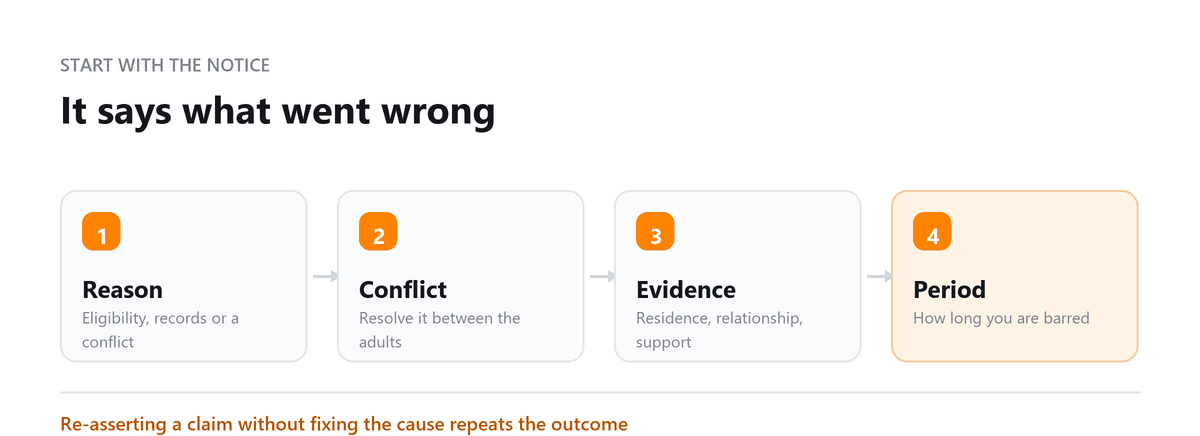
Some taxpayers find that their issue with the IRS isn't merely a paperwork hurdle. For example, if the IRS determined that the taxpayer's claim involved reckless or intentional disregard of the rules, the taxpayer cannot claim the credit for two years. If the IRS determined fraud, the taxpayer cannot claim the credit for ten years.
Knowing if a ban is in place, and gathering the necessary documentation to reinstate eligibility before filing tax returns claiming the credits that the IRS previously disallowed are what keep a subsequent claim for a disallowed credit from being denied.
When to File Form 8862
Form 8862 doesn't have its own deadline. It's attached to your return for the year you're claiming the credit and is due when that return is due, generally April 15, or October 15 with an extension.
If you were eligible for a credit in a prior year but didn't claim it because of a disallowance, and that year wasn't in a ban period, you may be able to file an amended return with Form 8862. A claim for refund generally must be filed within three years from the date you filed the original return, or two years from the date you paid the tax, whichever is later.
What to Expect After Filing
Refund timing. By law, the IRS can't issue refunds on returns claiming the EITC or Additional Child Tax Credit before mid-February, and returns with Form 8862 may take longer.
Possible IRS review. The IRS may send a letter asking for documents to support your eligibility. Respond by the deadline in the letter.
Allowance or denial. If the IRS allows the credit, you don't need to file Form 8862 again for that credit unless it's disallowed in the future. If it's disallowed again, you'll need Form 8862 the next time you claim it, and a ban may apply depending on the IRS's finding.
Exceptions: When You Don't Need Form 8862
You generally don't need to file Form 8862 if:
You filed Form 8862 after the disallowance and the IRS allowed the credit, and it hasn't been reduced or disallowed again since.
Your EITC was disallowed only because a child wasn't a qualifying child, and you're now claiming the EITC without a qualifying child.
You're in a ban period. You can't claim the credit at all during a ban period, so Form 8862 isn't filed until the ban ends.
Review the current Form 8862 instructions for the full list of exceptions, since they differ slightly between credits.
When a client's EITC has been disallowed, the fix isn't just filing Form 8862. It's building the file the IRS will ask for before the return goes in. For a qualifying child, that means records showing the child lived at your address for more than half the year from childcare providers or social services. Most second denials happen because the family qualified but couldn't prove residency when the IRS asked. Having those documents ready before filing is what turns a repeat disallowance into an allowed credit.
Ankit Sarawagi, CPA, CA, MBA · LinkedInDisallowance Periods: How Long Are You Barred?
| Reason for Disallowance | How Long You Are Barred from Claiming Credit |
|---|---|
| Reckless or intentional disregard of rules | 2 years from the most recent year of disallowance |
| Fraud | 10 years from the most recent year of disallowance |
| Error (no finding of recklessness or fraud) | No ban, may file Form 8862 immediately in the following year |
Credits Covered by Form 8862
| Credit | Key Eligibility Requirement Checked |
|---|---|
| EITC | Income, filing status, qualifying child residency and relationship, SSN, investment income limit |
| CTC / ACTC | Child's age (under 17), SSN, relationship test, dependent test |
| AOTC | First 4 years of higher education, at least half-time student enrollment, no prior AOTC disallowance or felony drug conviction |
Form 8862 is the step between a disallowed credit and a credit that can be claimed again. If the IRS reduced or disallowed your Earned Income Tax Credit, Child Tax Credit, Credit for Other Dependents, or American Opportunity Tax Credit for anything other than a math or clerical error, you generally need to attach Form 8862 the next time you claim it.
A finding of reckless disregard bars the credit for two years, and fraud bars it for ten. Confirm you're outside any ban, check every eligibility requirement, gather records that prove them, and file Form 8862 once with the return for the year you claim the credit.
Profitjets has handled more than 35 Form 8862 engagements, helping taxpayers address previously disallowed EITC, Child Tax Credit, and American Opportunity Tax Credit claims and prepare the documentation needed to support renewed eligibility.
“My EITC was disallowed after a previous preparer made an error on my return, and I wasn't sure how to correct the issue. Profitjets prepared Form 8862, gathered the required income and dependent documentation, and helped me successfully restore the credit on my next tax return.”
Book a free consultation and we will work out why first.
FAQs
When do I need to file Form 8862?
You generally need it if the IRS reduced or disallowed your Earned Income Tax Credit, Child Tax Credit, Additional Child Tax Credit, Credit for Other Dependents, or American Opportunity Tax Credit for a prior year for any reason other than a math or clerical error, and you now want to claim that credit again. You file it once, with the first return claiming the credit after the disallowance.
What's the difference between the 2-year and 10-year ban?
If the IRS determined that a prior claim was due to reckless or intentional disregard of the rules, you can't claim that credit for the two tax years after the year of that determination. If it determined the claim was fraudulent, the ban lasts ten tax years. If the claim was simply wrong, with no such finding, there's no ban, and you file Form 8862 when you next claim the credit.
Can I file Form 8862 with an amended return?
Yes. If you qualified for one of these credits in a prior year but didn't claim it, and that year wasn't in a ban period, you can generally file Form 1040-X with Form 8862 to claim it. The amended return must be filed within three years from the date you filed the original return, or two years from the date you paid the tax, whichever is later.
Do I need to file Form 8862 every year?
No. Once you file Form 8862 and the IRS allows the credit, you don't need to file it again for that credit in later years. You'd only need it again if the credit is reduced or disallowed in the future.
Will filing Form 8862 delay my refund?
It can. Refunds on returns claiming the Earned Income Tax Credit or Additional Child Tax Credit can't be issued before mid-February, and returns with Form 8862 may take longer, especially if the IRS asks for documentation. Having your records ready and responding promptly to any IRS letter helps avoid further delays.

Written by
Ankit Sarawagi, CPA, CA, MBA
Ankit leads the finance team at Profitjets, where he has worked with 500+ businesses across the US on bookkeeping, tax and CFO-level strategy. He writes about the habits that keep small business books accurate all year. Connect on LinkedIn
Free consultation
Credit Denied Last Year?
Book a free consultation and we will work out why first.