
Many people who buy health insurance through HealthCare.gov or a state exchange don't know the premium they pay when they enroll in a plan via the Marketplace is subject to a tax return.
The discount is reflected in every invoice, the coverage is there, and nothing in the enrollment process gives the impression that what they're doing is a tax decision.
But then a new job, a raise, a contract for freelance work or a returning to work spouse pushes the household's income over the estimate provided to the Marketplace at the time of enrollment. At tax time, some money is owed, because a portion of the monthly discount has been claimed.
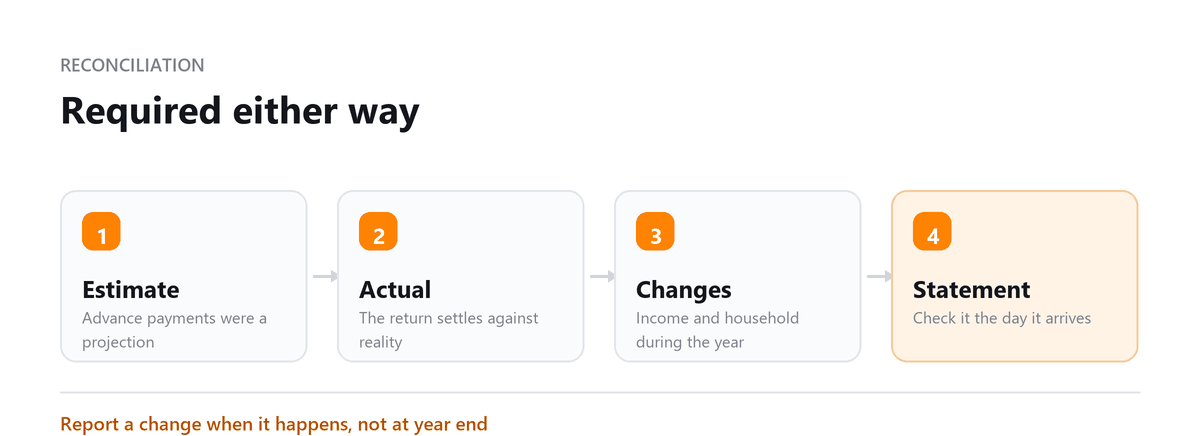
When enrolling, the Marketplace estimates the credit you qualify for based on the income you're expecting and pays that amount directly to your insurer monthly, and Form 8962 is the place where the estimate is compared to the truth.
Using your Form 1095-A and your actual household income for the year, your tax professional will determine the premium tax credit you were entitled to and compare that with the advance you received. If you were paid too little, you'll get the difference, and if you were paid too much, you'll pay some or all of it back.
The stakes are high. For 2025 returns, many households still have a cap on the amount of excess advance credit they must repay, which is abolished beginning with the 2026 tax year.
Keeping your Marketplace income figure up to date during the year is more important than ever.
This guide explains who must file Form 8962, who qualifies for the premium tax credit, how the credit is calculated, how repayment works and what the caps are for 2025, what changes starting in 2026, special situations, and how to complete and file the form.
Who Must File Form 8962?
Form 8962 reconciles the advance premium tax credit (APTC) you received during the year with the actual PTC you are entitled to based on your year-end income. If you enrolled in a Marketplace health plan and received advance payments of the premium tax credit, you must file Form 8962 regardless of whether you owe tax or are getting a refund.
- Any taxpayer who enrolled in a Marketplace health insurance plan and received advance PTC payments (the IRS paid premiums directly to the insurer on your behalf)
- Any taxpayer who enrolled in a Marketplace plan and wants to claim the PTC, even if they did not receive advance payments
- NOT required if you were enrolled in employer-sponsored health insurance, Medicare, Medicaid, or CHIP, only Marketplace plans
The biggest surprise clients face at tax time is a repayment they didn't see coming after a mid-year income change. Someone enrolls expecting $45,000, picks up freelance work or a new job in the summer, and finishes the year at $70,000 without ever updating the Marketplace.
The advance credit kept being paid as if their income never changed, so a large part of it comes back as tax owed in April. Reporting the change within a few weeks lets the Marketplace lower the advance payments for the rest of the year, which turns a big repayment into a small one.
Ankit Sarawagi, CPA, CA, MBA · LinkedInPremium Tax Credit Income Eligibility (FPL Thresholds)
For TY2025: Premium Tax Credit is available to taxpayers with household income between 100% and 400% of FPL (and above 400% FPL through at least 2025 under the ARP extension). The credit phases out as income increases, those near 400% FPL receive a very small credit.
2025 FPL reference points (continental U.S.):
- 100% FPL (individual): approximately $15,060; 400% = $60,240
- 100% FPL (family of 4): approximately $31,200; 400% = $124,800
Verify current FPL figures with HHS.gov before publishing, updated annually.
Repayment Caps If You Received Too Much APTC
| Household Income (% FPL) | Repayment Cap, Single | Repayment Cap, All Others |
|---|---|---|
| Less than 200% | $375 | $750 |
| 200% to 299% | $950 | $1,900 |
| 300% to 399% | $1,575 | $3,150 |
| 400%+ (with ARP extension through 2025) | No cap, full repayment required | No cap, full repayment required |
Filing Deadline
Form 8962 doesn't have its own deadline. It's attached to your Form 1040, 1040-SR, or 1040-NR and is due when that return is due, generally April 15, or October 15 with an extension. Any excess advance credit repayment is still owed by April 15.
If advance credits were paid for you and your return doesn't include Form 8962, an electronic return can be rejected, and the IRS may hold your refund until the reconciliation is received.
What Happens If You Don't Reconcile?
If advance payments were made for you and you don't file Form 8962, the IRS will generally ask you to file it. Failing to reconcile can also make you ineligible for advance payments when you enroll in or renew Marketplace coverage for a future year, which would mean paying the full monthly premium until the issue is resolved.
Required Source Document: Form 1095-A
The Health Insurance Marketplace sends Form 1095-A (Health Insurance Marketplace Statement) by January 31. It shows the months covered, second lowest cost silver plan (SLCSP) premium, and advance credit payments. You cannot complete Form 8962 without this form.
Profitjets has supported more than 50 ACA Marketplace clients, including clients who needed advance premium tax credit (APTC) reconciliation through Form 8962 after changes in income or household circumstances.
“I took on a new freelance contract mid-year, which increased my income and meant I had received more advance premium tax credit than I ultimately qualified for. Profitjets helped me complete the Form 8962 calculation, explained the potential repayment, and advised me to update my Marketplace income estimate so future APTC amounts would better reflect my actual income.”
Book a free consultation and we will handle the reconciliation.
Frequently Asked Questions
Who has to file Form 8962?
Anyone who had advance premium tax credit payments made for themselves or a member of their tax family must file Form 8962, even if their income is below the normal filing threshold. People who bought Marketplace coverage without advance payments also file it to claim the credit.
When is Form 8962 due?
It's filed with your federal income tax return and is due when that return is due, generally April 15, or October 15 with an extension. Any excess advance credit you owe is still due by April 15.
What happens if my income went up and I received too much advance credit?
You repay the excess when you file. For 2025, repayment is capped for households with income below 400 percent of the federal poverty line, ranging from $375 for single filers with the lowest incomes to $3,250 for other filers near 400 percent. Households at or above 400 percent repay the full amount. Starting in 2026, the caps are eliminated.
Can I claim the premium tax credit if I'm married filing separately?
Generally not. The main exception is for taxpayers who are victims of domestic abuse or spousal abandonment and meet the requirements. They can claim the credit on a separate return by checking the relief box on Form 8962.
What if I don't file Form 8962 when I received advance payments?
The IRS will generally ask you to file it, may hold your refund, and your electronic return may be rejected. Not reconciling can also make you ineligible for advance credits in a future year, so you'd pay the full premium until the issue is resolved.

Written by
Ankit Sarawagi, CPA, CA, MBA
Ankit leads the finance team at Profitjets, where he has worked with 500+ businesses across the US on bookkeeping, tax and CFO-level strategy. He writes about the habits that keep small business books accurate all year. Connect on LinkedIn
Free consultation
Marketplace Coverage Last Year?
Book a free consultation and we will handle the reconciliation.