
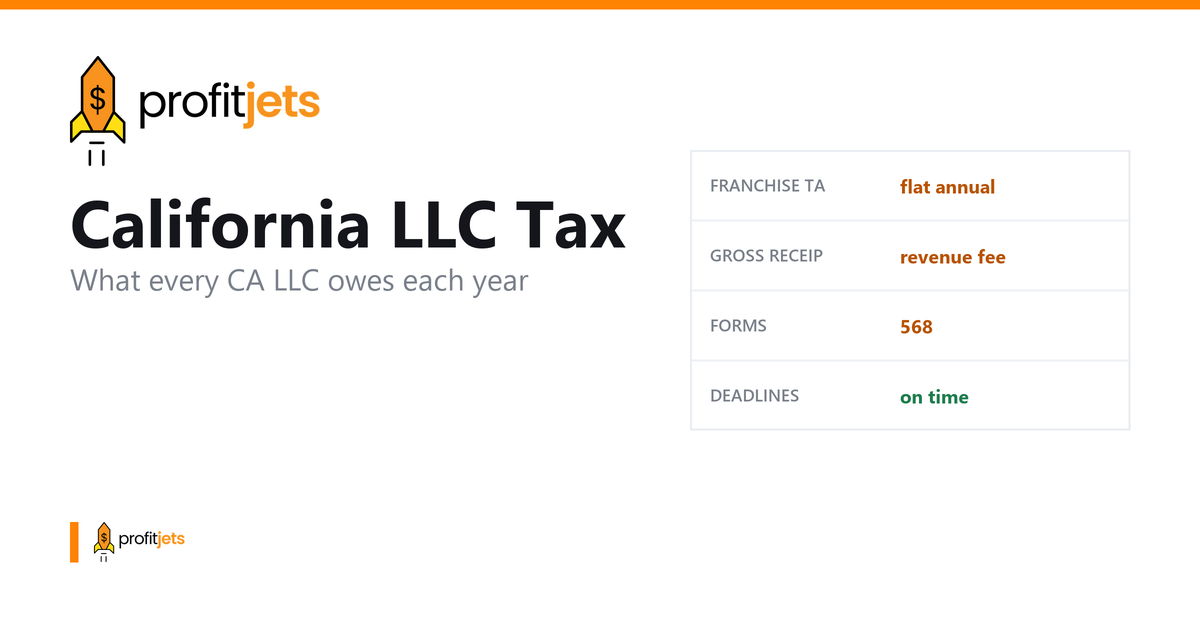
When forming or operating your LLC in California there are some unique tax requirements that will surprise many small business owners.
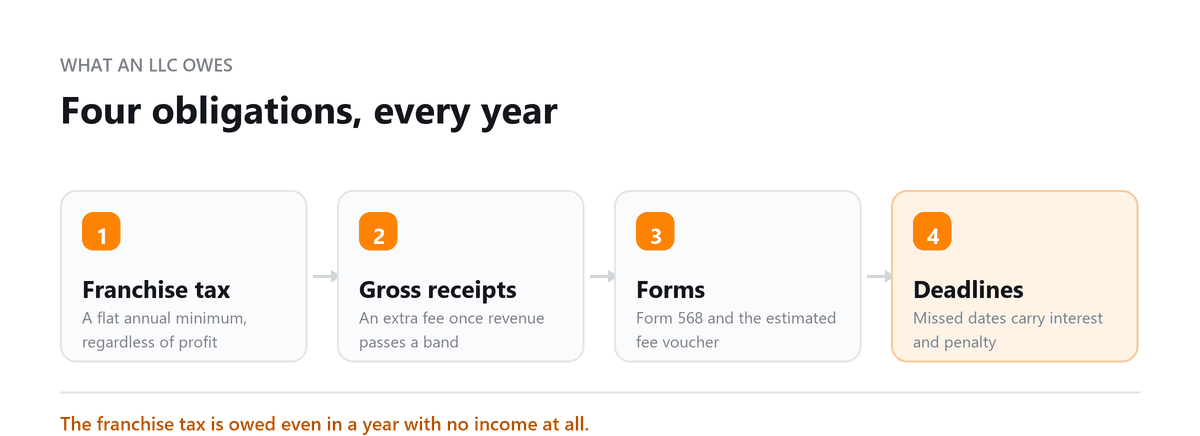
Firstly, don’t let other states confuse you: while most require annual reports costing less than $100, CA’s Franchise Tax Board demands each registered LLC must pay at least $800 annually as their “minimum franchise tax” even if they made zero profits on $0 in revenue. Further, if your LLC makes more than $250K in gross California income, then you also owe them a variable LLC fee ranging from $0-$11,790.
The key takeaway here? Know how to manage those separate due dates between Forms #3522 / #3536 / #568 so as NOT TO incur hefty FTB penalties & interest AND potentially lose your corporations’ standing!
All LLCs registered or doing business in California owe an $800 annual franchise tax to the California Franchise Tax Board (FTB), regardless of revenue or profit. Higher-revenue LLCs also pay an additional LLC fee. This guide covers what you owe, when it is due, and how to file.
What Is California LLC Tax?
California charges most LLCs two separate amounts each year, and they're easy to confuse because both are paid to the Franchise Tax Board.
| Charge | Who Owes It | How It's Paid |
|---|---|---|
| $800 annual LLC tax | Every LLC organized in, registered in, or doing business in California | Form 3522 voucher, due by the 15th day of the 4th month of the tax year |
| Annual LLC fee | LLCs with total income from California sources of $250,000 or more | Estimated on Form 3536 by the 15th day of the 6th month, then reported on Form 568 |
The $800 tax applies whether or not the LLC makes money, and even if it had no revenue at all. The LLC fee is based on gross income from California sources, not profit, so a business with thin margins can still owe it.
A single-member LLC that's disregarded for federal income tax purposes still owes both. California treats it as a separate entity for the annual tax and fee.
The California LLC deadline that catches owners out isn't the $800 tax. Most people hear about that one. It's the LLC fee. Once California income is headed past $250,000, the fee has to be estimated and paid by June 15 of the same year, long before the books are closed, and underpaying it triggers a 10 percent penalty.
Growing businesses are the most exposed, because they estimate from last year's lower revenue. I'd rather see an LLC pay the next tier up and get the difference back on Form 568 than guess low and pay the penalty.
Anu Gupta, CA, EA, B.Tech · LinkedInWhich LLCs Must Pay?
An LLC generally owes the $800 annual tax, and the LLC fee if its California income is high enough, if any of these apply:
It's organized in California. Every LLC formed under California law owes the tax, even if it operates entirely in another state.
It's registered with the California Secretary of State. An out-of-state LLC that registers to do business in California owes the tax.
It's doing business in California. An LLC organized and registered elsewhere owes the tax if it's doing business in California. That generally includes actively engaging in transactions for profit in the state, being commercially domiciled there, or having California sales, property, or payroll above thresholds the FTB adjusts each year, or equal to at least 25 percent of the LLC's total sales, property, or payroll.
For out-of-state LLCs, the thresholds matter most. An LLC with no office or employees in California can still be doing business there because of its sales into the state, or because it holds inventory in a California warehouse.
Which LLCs Don't Owe the Tax?
The exceptions are narrower than many older guides suggest.
LLCs with no California connection. An LLC that isn't organized in California, isn't registered there, and isn't doing business there doesn't owe the tax.
LLCs covered by the short-period rule. An LLC doesn't owe the annual tax for a tax year that's 15 days or fewer, provided it didn't do business in California during that period.
Certain LLCs owned by deployed service members. California provides relief for qualifying small business LLCs owned by a service member who is deployed during the tax year and whose LLC operates at a loss or ceases operation. Confirm current eligibility with the FTB.
The First-Year Exemption Has Ended
From 2021 through 2023, LLCs formed or registered in California didn't owe the $800 tax for their first taxable year. That exemption applied only to LLCs formed or registered during those years and has expired. An LLC formed today generally owes the $800 tax for its first year, due by the 15th day of the fourth month after it's formed.
Cancelling an LLC You Don't Need
An LLC keeps owing the $800 tax every year until it's properly cancelled with the Secretary of State and has filed its final returns with the FTB, even if it's stopped operating. If you've formed an LLC you no longer plan to use, cancelling it promptly is the only way to stop the annual charge.
California LLC Annual Fee Schedule
| Total Annual Income from California Sources | Annual LLC Fee |
|---|---|
| Less than $250,000 | $0 (no fee) |
| $250,000 to $499,999 | $900 |
| $500,000 to $999,999 | $2,500 |
| $1,000,000 to $4,999,999 | $6,000 |
| $5,000,000 or more | $11,790 |
How and When to File
| Form | Purpose | Due Date |
|---|---|---|
| Form 3522 | $800 minimum franchise tax | 15th day of 4th month of tax year (April 15 for calendar-year LLCs) |
| Form 3536 | Annual LLC fee (income over $250K) | 15th day of 6th month (June 15 for calendar-year LLCs) |
| CA Form 568 | LLC Return of Income | 15th day of 3rd month after tax year end (March 15) |
Penalties and Interest
· Underpayment of estimated LLC fee: 10% penalty (plus interest)
· Failure to file: 5% of tax per month, up to 25%
· Failure to pay: 0.5% per month
California is aggressive in enforcing LLC tax obligations, out-of-state LLCs that do business in California without registering and paying can face back taxes, penalties, and loss of the right to enforce contracts in California courts.
California LLC Tax vs Other States
California's $800 minimum franchise tax is one of the highest mandatory LLC fees in the US. By comparison: most states charge $0 to $150 annual LLC fees. Delaware charges $300/year. Wyoming and Nevada charge $60 to $200. This is a meaningful factor for businesses choosing a state of formation.
In 2025 to 2026, Profitjets managed tax compliance and filing strategies for over 240 California and out-of-state remote LLCs, saving clients an aggregate $112,000 in FTB late fees, nexus miscalculation penalties, and overpaid state estimates.
Conclusion
Every California LLC owes at least $800/year to the FTB, regardless of profit. Higher-revenue LLCs owe additional fees up to $11,790. Understanding the filing schedule and avoiding penalties requires tracking both Form 3522 and Form 3536 deadlines separately.
When an e-commerce brand based out of Texas expanded operations into a California fulfillment center, they were unaware that physical inventory triggered economic and physical nexus with the FTB. Profitjets stepped in to register the foreign LLC correctly, calculated their California-source income to avoid misestimating the Form 3536 annual fee, and saved the client over $4,200 in retroactive non-filing penalties while setting up an automated calendar for all future FTB quarterly obligations.
Book a free consultation and we will keep the filings and fees on schedule.
FAQs
How much is the California LLC annual tax in 2026?
Most LLCs doing business or organized in California must pay an $800 annual tax to the California Franchise Tax Board (FTB). The tax generally applies regardless of whether the LLC makes a profit. Certain statutory exceptions may apply. (ftb.ca.gov)
Is the California $800 LLC tax the same as the annual LLC fee?
No. The $800 annual tax is separate from California's LLC fee. An LLC with California income of $250,000 or more may also owe an additional annual LLC fee based on its total California income. (ftb.ca.gov)
Does a new California LLC have to pay the $800 franchise tax?
Generally, yes. The temporary first-year exemption for qualifying LLCs formed or registered between January 1, 2021, and December 31, 2023, has expired. New California LLCs should therefore review the current FTB rules to determine whether the $800 annual tax applies.
When is California LLC tax due?
The $800 annual LLC tax is generally due by the 15th day of the fourth month of the taxable year. For an LLC using a calendar tax year, this is typically April 15. Different deadlines can apply depending on the LLC's tax year and circumstances. (ftb.ca.gov)
What happens if a California LLC does not pay its annual tax?
The LLC may face penalties and interest for unpaid taxes and could eventually be suspended or forfeited by the FTB. A suspended LLC can lose important legal and business privileges. To restore its status, the LLC generally must resolve outstanding tax obligations and complete the required reinstatement process.

Written by
Anu Gupta, CA, EA, B.Tech
Anu works with US businesses on tax and entity questions at Profitjets, from choosing a structure to the filings that follow it. She writes about the decisions owners make once and then live with for years. Connect on LinkedIn
Related articles
Free consultation
Running a California LLC?
Book a free consultation and we will keep the filings and fees on schedule.