
Form 1095-A (Health Insurance Marketplace Statement) is NOT something you file, it is sent TO you by the Health Insurance Marketplace by January 31. It shows your ACA Marketplace coverage details, the second lowest cost silver plan (SLCSP) premium in your area, and the advance premium tax credits paid on your behalf. You use this form to complete Form 8962, which reconciles your advance credits on your annual tax return.
Many people who buy health insurance through HealthCare.gov or a state exchange don't think about taxes when they enroll. They pick a plan, the monthly premium is lower than expected thanks to an advance credit, and coverage starts.
Then in January a Form 1095-A arrives, tax software asks for figures from it, and a return that seemed straightforward shows a balance due or a refund that doesn't match what they expected.
That's because the lower premium came with a condition. The advance premium tax credit paid to your insurer each month is based on an estimate of your income for the year. When you file your return, you reconcile that estimate against your actual income.
Form 1095-A is the statement from the Marketplace that shows what you were enrolled in, what the benchmark plan cost, and how much advance credit was paid on your behalf. You use it to complete Form 8962, Premium Tax Credit, which is the form you actually file.
This guide explains what Form 1095-A is, who receives it and when, what each part shows, how it feeds into Form 8962, how to handle errors and multiple forms, and what changed for premium tax credit reconciliation starting in 2026.
Getting it right matters more than it used to. If your income came in higher than you estimated, you may have to repay some or all of the advance credit.
Starting with the 2026 tax year, the limits that used to cap that repayment for many households no longer apply. An incorrect Form 1095-A, a missed form from a mid-year plan change, or a failure to reconcile can lead to IRS notices, a larger tax bill, or losing advance credits in future years.
What is Form 1095-A?
Form 1095-A, Health Insurance Marketplace Statement, is issued by HealthCare.gov or a state-based Marketplace to people who enrolled in a qualified health plan through the Marketplace. The Marketplace also sends the information to the IRS.
You don't file Form 1095-A with your return. You keep it with your tax records and use it to complete Form 8962, which calculates the premium tax credit you're actually entitled to and reconciles it with any advance payments made during the year.
Who Receives Form 1095-A?
You'll receive a Form 1095-A if you or someone in your tax household was enrolled in a Marketplace plan for any part of the year. A separate form is generally issued for each policy.
You won't receive one if your coverage came only from employer-sponsored insurance, Medicare, Medicaid, CHIP, TRICARE, or a plan bought directly from an insurer outside the Marketplace. Those types of coverage may be reported on Form 1095-B or 1095-C instead, and neither is needed to complete Form 8962.
When Will You Receive Form 1095-A?
The Marketplace must furnish Form 1095-A by January 31 of the year after the coverage year. Many people can download it from their HealthCare.gov or state Marketplace account before a paper copy arrives.
If you haven't received it by early February, log in to your Marketplace account or contact the Marketplace directly. Don't file a return that claims or reconciles the premium tax credit until you have the form.
The Form 1095-A error I see most often is a wrong or missing benchmark premium in Column B. Families add a baby, move to a new county, or change household size during the year, the Marketplace doesn't update the benchmark, and the premium tax credit gets calculated on the wrong number.
Before filing, check that Column B reflects the right people and location for every month. If it doesn't, request a corrected form or use the Marketplace tax tool to find the correct benchmark, rather than filing with numbers you already suspect are wrong.
Ankit Sarawagi, CPA, CA, MBA · LinkedInWhat Is on Form 1095-A?
| Part / Column | What It Shows |
|---|---|
| Part I | Recipient (your) name, Social Security Number, and Marketplace plan information |
| Part II | Members of your household covered under the plan during the year |
| Part III, Column A | Monthly enrollment premium, the full premium for your plan each month |
| Part III, Column B | Monthly premium for the SLCSP (second lowest cost silver plan) in your area, used to calculate the PTC |
| Part III, Column C | Monthly advance premium tax credit (APTC) paid to your insurer on your behalf |
How to Use Form 1095-A to Complete Form 8962
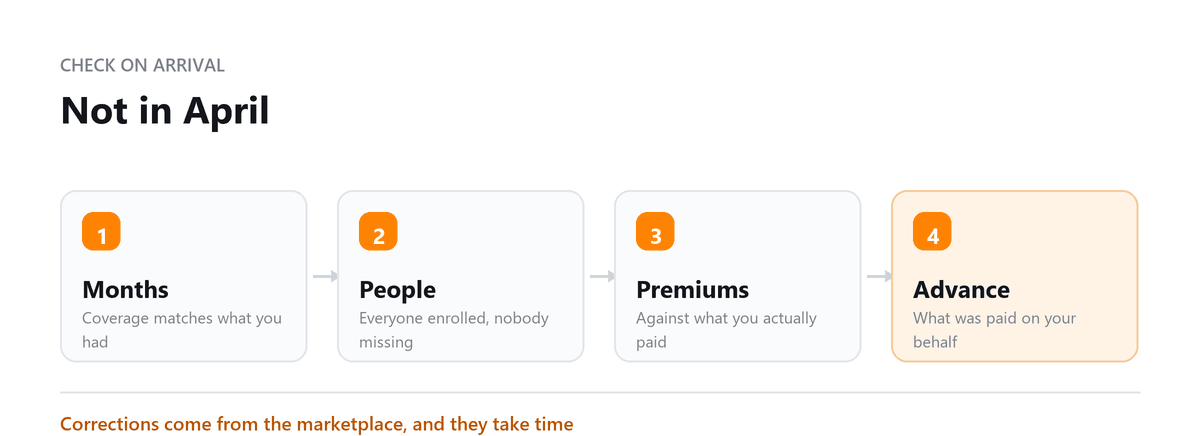
The three columns of Part III drive Form 8962:
- Column A (enrollment premium), used to calculate the net premium you actually paid
- Column B (SLCSP premium), the benchmark for calculating your actual PTC entitlement; the PTC is based on the SLCSP, not your actual plan premium
- Column C (advance credit paid), compared to your actual credit entitlement to determine whether you owe additional tax (excess APTC) or are due an additional credit
What If Your Form 1095-A Has Errors?
- If your 1095-A shows incorrect SLCSP or coverage months, contact healthcare.gov (or your state Marketplace) to request a corrected 1095-A
- Do NOT file Form 8962 using an incorrect 1095-A, the IRS matches 1095-A data from the Marketplace and mismatches trigger correspondence
- If you moved mid-year or changed plans, you may receive multiple 1095-A forms, use data from all of them on a single Form 8962
What If You Didn't Enroll in a Marketplace Plan?
If you had employer-sponsored health insurance, Medicare, Medicaid, CHIP, or a short-term health plan, you will NOT receive a Form 1095-A and do not file Form 8962. Only ACA Marketplace (healthcare.gov or state exchange) enrollees receive 1095-A.
If advance premium tax credits were paid on your behalf, you're generally required to file a federal tax return and Form 8962, even if your income is below the normal filing threshold.
Not filing can lead to an IRS notice asking you to file, and it can make you ineligible for advance credits when you enroll or renew Marketplace coverage in a future year. Filing Form 8962 on time protects both your current tax position and your future coverage assistance.
Book a free consultation and we will check it against your records.
Frequently Asked Questions
Do I file Form 1095-A with my tax return?
No. Form 1095-A is sent to you by the Marketplace for your records. You use the information on it to complete Form 8962, Premium Tax Credit, which you file with your return.
When do I get Form 1095-A?
The Marketplace must furnish it by January 31 of the year after your coverage. You can usually download it earlier from your HealthCare.gov or state Marketplace account. If you haven't received it by early February, contact the Marketplace.
What should I do if my Form 1095-A is wrong?
Contact HealthCare.gov or your state Marketplace and ask for a corrected form. If the benchmark premium in Column B is wrong or blank, you can generally find the correct figure using the Marketplace's tax tool. Avoid filing with figures you know are incorrect, and file an amended return if a correction changes your credit after you've filed.
Do I have to repay advance premium tax credits if my income went up?
If your actual income means you were entitled to less credit than was paid in advance, you repay the difference on your return. Before 2026, repayment was capped for many households. Starting with the 2026 tax year, those caps were removed, so the full excess amount generally must be repaid.
Do I need to file a return if advance credits were paid but my income is low?
Yes. If advance premium tax credits were paid for you or someone in your tax family, you generally must file a tax return with Form 8962, even if your income is below the normal filing threshold. Not reconciling can make you ineligible for advance credits in future years.

Written by
Ankit Sarawagi, CPA, CA, MBA
Ankit leads the finance team at Profitjets, where he has worked with 500+ businesses across the US on bookkeeping, tax and CFO-level strategy. He writes about the habits that keep small business books accurate all year. Connect on LinkedIn
Free consultation
Statement Looks Wrong?
Book a free consultation and we will check it against your records.