
Most comparisons of business bank accounts are made on features, but the choice is really between two questions: Are you dealing with cash, and are you a US person?
Yes to cash and the fintech sites fall out (mostly don't take cash deposits at all) and no amount of yield on cash makes up for the inability to bank your cash deposits. Yes to being a US person and most traditional banks are out, wanting an SSN and often requiring a personal visit.
Between the two questions, most people shopping for an account would have already decided which camp they're in before thinking about fees.
This guide will cover the 5 accounts we recommend for an LLC banking, what they're good for, and how to tell which camp you're in.
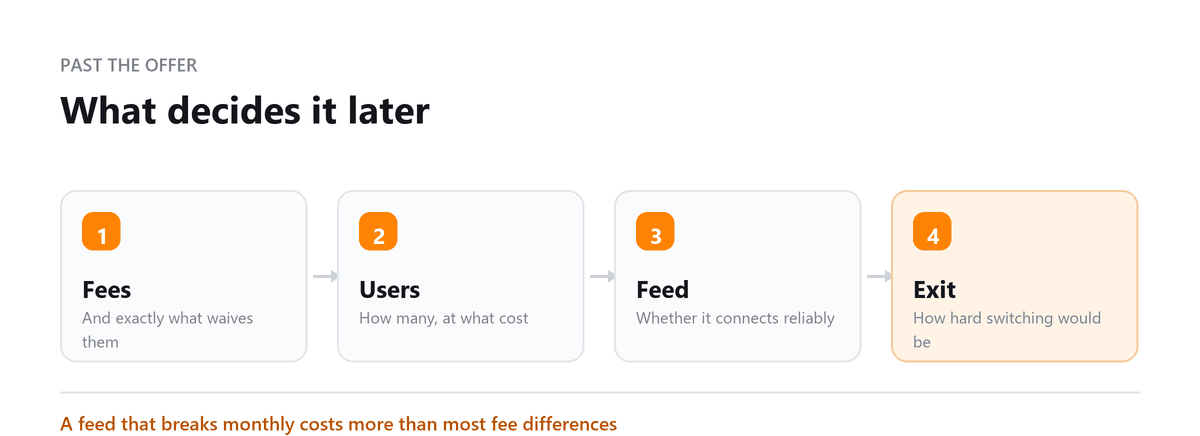
The feature owners overlook is accounting integration, and they discover it in their first month-end. An account that syncs transactions cleanly into QuickBooks or Xero saves hours every month, permanently. One that doesn't means someone is exporting CSVs and matching entries by hand, which is both a cost and a source of errors. People choose on APY and then pay for it in bookkeeping time worth several multiples of the interest.
Ankit Sagatani, MBA, B.Com · LinkedInWhy LLCs Need a Dedicated Business Bank Account?
An LLC's liability protection depends on maintaining a clear separation between the owner's personal finances and the LLC's finances. A dedicated business bank account is the most fundamental step in maintaining that separation. Courts regularly pierce the LLC veil when owners mix personal and business funds, meaning personal assets become exposed to business liabilities. Beyond liability, a dedicated account simplifies tax filing, enables clean bookkeeping, and is required by most payment processors and lenders.
Top 5 Business Bank Accounts for LLCs in 2026
1. Mercury, Best for Startups and Foreign-Owned LLCs
Mercury is a neobank designed specifically for startups and technology companies. It requires no minimum balance, charges no monthly fees, and supports remote account opening without requiring an SSN, making it ideal for foreign-owned US LLCs and international founders.
- Monthly fee: $0
- Minimum balance: none
- Integrations: Xero, QuickBooks, Gusto, Stripe, Plaid
- Standout features: free domestic and international wires, treasury yield on balances, cap table and investor payment tools
- Best for: early-stage startups, tech companies, foreign-owned US LLCs
2. Chase Business Complete Banking, Best for Brick-and-Mortar LLCs
Chase is the largest US bank by assets and offers the most extensive branch and ATM network, essential for businesses that handle physical cash, need in-person banking support, or have employees who need branch access.
- Monthly fee: $15/month (waivable with $2,000 minimum daily balance or $2,000+ in monthly card payments)
- Branches / ATMs: 4,700+ branches, 16,000+ ATMs nationwide
- Integrations: QuickBooks
- Best for: retail LLCs, restaurants, service businesses with physical locations, cash-intensive businesses
3. Bluevine Business Checking, Best for LLCs Wanting Interest on Balances
Bluevine offers business checking with interest on balances, historically among the highest yields available for a business checking account. No monthly fee, no minimum balance, and includes ACH and wire transfers.
- Monthly fee: $0 (or $15/month for Bluevine Plus with additional features)
- APY on balances: verify current rate, was 2.00% on balances up to $250,000 (this figure changes with the Federal Reserve rate environment)
- Best for: LLCs holding significant cash balances who want to earn yield without locking up funds
4. Bank of America Business Advantage, Best for Growing LLCs
Bank of America offers a full suite of business banking products, checking, savings, merchant services, business credit cards, and lines of credit, under one roof. Good for LLCs that want to consolidate banking relationships and eventually access credit.
- Monthly fee: $16/month (waivable with $5,000 average monthly balance)
- Best for: established LLCs with consistent cash balances looking for a full-service traditional bank relationship
5. American Express Business Checking, Best for LLCs Focused on Rewards
American Express Business Checking is notable for its rewards integration with Amex cards and historically competitive APY on balances. No monthly fee, no minimum balance.
- Monthly fee: $0
- APY on balances: verify current rate, was 1.30% on balances up to $500,000 (this figure changes with Fed rate environment)
- Best for: LLCs already using Amex cards who want rewards integration and competitive yield on checking balances
Which of these is actually you
You take physical cash → Chase or Bank of America. Nothing else on this list can bank your deposits, and that decides it before you compare anything.
You're a non-US founder → Mercury, almost certainly. The traditional banks want an SSN and usually a visit. This is the most common route for foreign-owned LLCs and the reason it's first on the list.
You're a US-based online or service business with no cash → Mercury or Bluevine on fees and integration, with Bluevine ahead if you're holding balances worth earning on.
You expect to borrow within a year or two → start the traditional bank relationship now. Lending decisions consider the relationship history, and fintech platforms generally don't build that or report to commercial credit bureaus.
You're already deep in the Amex ecosystem → the rewards integration is a genuine edge, but check the yield against Bluevine before deciding.
One thing that applies to all of these: check the accounting integration before the rate. Hours of monthly reconciliation cost more than a percentage point on a small balance.
Factors to Consider When Choosing a Business Bank Account
| Factor | Why It Matters |
|---|---|
| Monthly fees | Avoid unnecessary ongoing costs; many neobanks are free |
| Cash deposit capability | If your LLC handles physical cash, you need a bank with branches or ATM cash deposit, neobanks often cannot accept cash |
| Accounting integration | Direct Xero/QuickBooks integration saves hours monthly on reconciliation |
| Interest on balances | Earn yield on idle cash, especially valuable for LLCs with seasonal revenue patterns or tax reserves |
| Wire transfer fees | Frequent international payments? Find an account with low or free international wires |
| Customer support | 24/7 support matters when you have a payment problem on a Friday afternoon |
Book a free consultation and we will match it to how you operate.
Frequently Asked Questions
Do LLCs need a business bank account?
No federal law requires one, but functionally yes. The liability protection you formed the LLC for depends on operating it as genuinely separate from yourself, and commingled funds are the most common factor in cases where that protection fails. Treat it as a requirement.
Can a single-member LLC open a business account?
Yes, with the same documentation as any LLC: EIN, Articles of Organisation, operating agreement and government ID. Write the operating agreement even as a sole member; some providers ask for it, and it's part of demonstrating the entity is genuinely separate.
Which account is best for a brand new LLC with no revenue?
Mercury or Bluevine, since both open remotely with no monthly fee or minimum balance. For a foreign-owned LLC, Mercury is the usual answer because it doesn't require an SSN. Don't over-optimise at this stage: you can move later, and the important thing is having a business account from the first transaction rather than the ideal one.
Should I use a fintech platform or a traditional bank?
Depends on cash and credit. If you handle physical cash or expect to borrow soon, a traditional bank. If you're online, US or foreign-owned, and want lower fees with better software, a fintech platform. Plenty of businesses end up with both, a platform for operations and a bank relationship built for later.
Can I have accounts at more than one provider?
Yes, and past the earliest stage it's sensible. A freeze or outage on your only account stops payroll and supplier payments until someone else's review completes. Most of these cost nothing to hold, so a second account is inexpensive protection against a stoppage you can't influence.

Written by
Ankit Sagatani, MBA, B.Com
Ankit works with business owners across the US on industry-specific bookkeeping, from real estate to construction and retail. He writes about what each trade's books actually need. Connect on LinkedIn Connect on LinkedIn
Free consultation
Choosing a Bank for Your LLC?
Book a free consultation and we will match it to how you operate.