
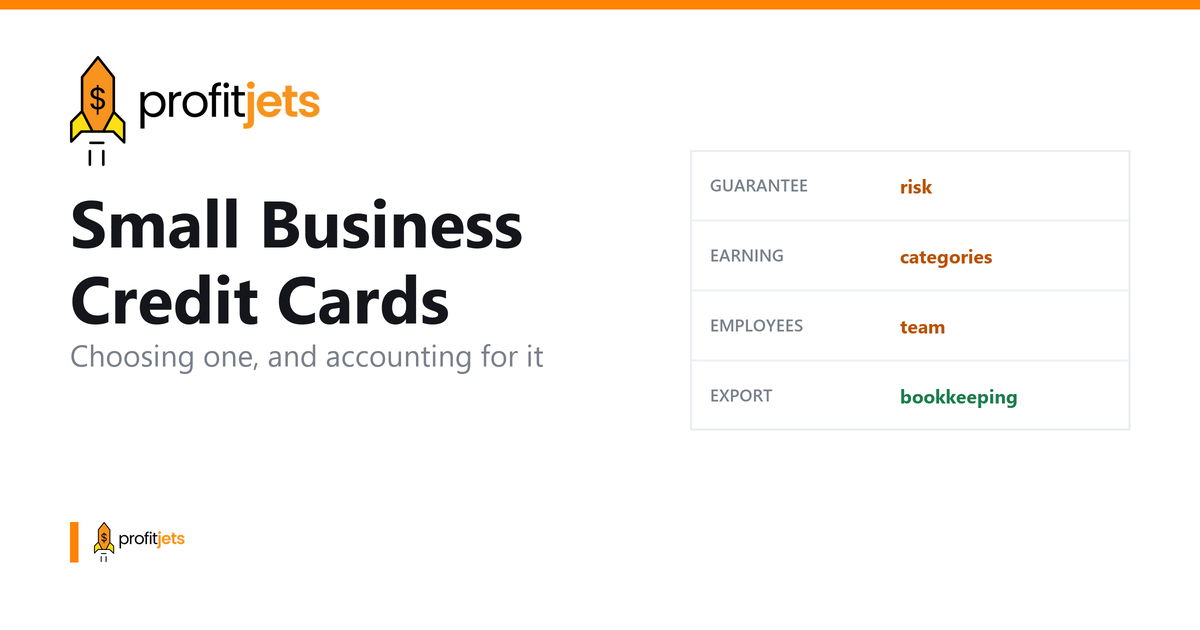
Most commonly, a small business owner is making a business credit card choice based on its sign-up bonus. It is a generous sum, the card is easy to get approved for, and it immediately looks like a good decision, with the new card next to one's personal card. However, a year later, having spent the bonus, a card with uninteresting categories is there, and the bookkeeper is still trying to separate personal expenses that accidentally got swiped on the business card.
While the bonus may seem significant, it is the least of the concerns in a business credit card choice. The real reasons for getting one are to keep track of expenses clearly, have some time to pay off the balance without incurring interest, and get rewards on expenditures that would happen anyway. A card with the best match to one's category spending and payment behavior will help achieve these goals.
This article will discuss the importance of having a separate business credit card and analyze the most popular options, comparing their advantages and disadvantages.
The most expensive credit card mistake I see isn't a high annual fee. It's a business run on the owner's personal card. Every month someone goes through a statement full of groceries, streaming subscriptions, and software charges and decides what belongs where. Things get missed, deductions get lost, and if the IRS ever asks, there's no clean line between personal and business. A dedicated business card with nothing personal on it removes that problem entirely, and it matters more than which card earns an extra point on travel.
Ankit Sagatani, MBA, B.Com · LinkedInWhy Every Small Business Needs a Dedicated Business Credit Card
| Benefit | Detail |
|---|---|
| Clean expense separation | Every business charge on the card is automatically separated from personal spending, makes bookkeeping, tax prep, and audit defence dramatically simpler |
| Build business credit | A business credit card builds your company's credit profile (Dun & Bradstreet, Experian Business, Equifax Business), important for future loans and supplier terms |
| Cash flow management | 30-day payment terms on purchases, effectively interest-free short-term working capital if paid in full each month |
| Rewards on spending | Earn points, miles, or cash back on spending you would make regardless, equivalent to a permanent discount on operating costs |
| Employee cards | Issue additional cards to employees with individual spend limits, track and control team spending |
| Purchase protection | Most business cards offer extended warranty, purchase protection, and fraud liability protection |
Best Business Credit Cards in 2026
| Card | Annual Fee | Best For | Key Benefit |
|---|---|---|---|
| Chase Ink Business Cash | $0 | Cash back; businesses spending on internet/cable/phone and office supplies | 5% cash back on first $25k/year at office supply stores and internet/cable/phone, verify current offer |
| Chase Ink Business Preferred | ~$95 | Travel rewards; large sign-up bonus; businesses with significant travel and ad spend | Points transferable to airlines/hotels; high earn on travel and advertising, verify current bonus |
| American Express Blue Business Plus | $0 | Flat-rate rewards; Amex acceptance; businesses wanting simple earning | 2x Amex Membership Rewards on first $50k/year; no annual fee |
| American Express Business Gold | ~$375 | High-category-bonus spending; businesses with predictable large-category spend | 4x on 2 highest-spending categories per month (select categories) |
| Capital One Spark Cash Plus | $150 (can be offset by spend bonus) | High cash back; businesses with high monthly spend | 2% cash back on all purchases; additional cash bonus for meeting spend threshold, verify |
| Brex Card | $0 base | VC-backed startups; no personal guarantee; accounting integrations | No personal guarantee; rewards on software, travel, restaurants; requires VC backing or significant cash on deposit |
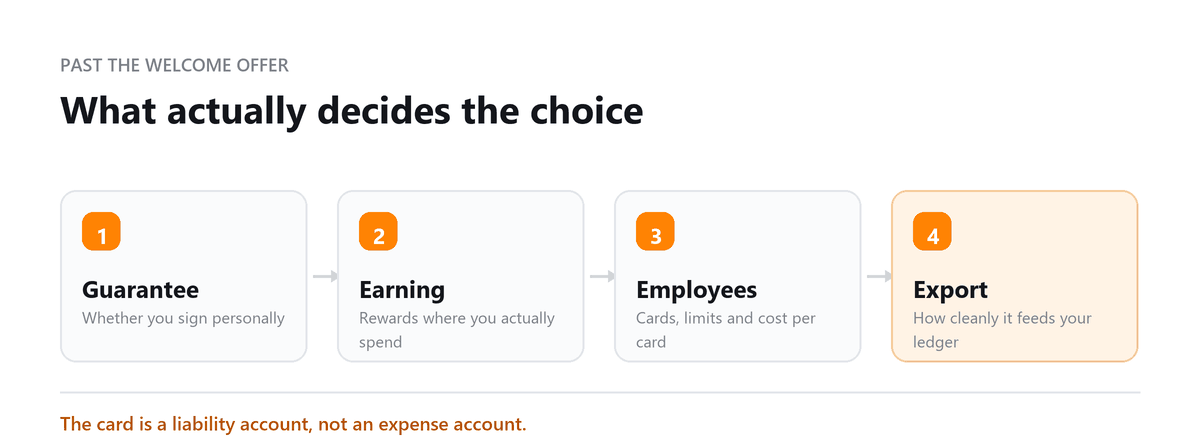
Business Credit Card vs Personal Card for Business
| Factor | Business Card | Personal Card for Business |
|---|---|---|
| Expense separation | Automatic, every charge is business | Manual, must separate from personal charges |
| Bookkeeping | Clean feed into QBO/Xero | Requires filtering personal transactions |
| Business credit | Builds business credit profile | Does not build business credit (builds personal) |
| Employee cards | Yes, with individual limits and controls | Limited, issuing personal card to employee creates liability |
| IRS audit risk | Lower, clean separation | Higher, mixed personal/business transactions raise questions |
| Liability | Separate from personal (some business cards) | Personal liability applies to all charges |
| Reward categories | Optimised for business spending (tech, travel, advertising) | Consumer categories (groceries, streaming), less relevant |
Choosing Based on How You Actually Spend
Pull the last three to six months of business spending from your accounting system and group it into a few categories: software, advertising, travel, supplies, and everything else. That breakdown tells you which rewards structure will pay you the most. A card with a large bonus in a category you barely use is worth less than a plain flat-rate card.
Then decide honestly how you'll pay the balance. Rewards cards only come out ahead when the balance is paid in full each month. Carrying a balance at a typical business card APR wipes out any rewards quickly. If you expect to carry one, the interest rate matters more than the points.
How to Choose a Business Credit Card
| Your Profile | Best Choice |
|---|---|
| You want simplicity, one card, flat rate, no category tracking | Capital One Spark Cash Plus (2% all purchases) or Amex Blue Business Plus (2x points on all, $50k cap) |
| Your biggest spend is on software, cloud, and tech services | Brex Card (3 to 7x on software) if VC-backed; Chase Ink Business Cash (5% on internet/phone/office supplies) if not |
| You or your team travel frequently for business | Chase Ink Business Preferred (high travel earn + transferable points) or Amex Business Gold (4x on travel category if that's top spend) |
| You want no annual fee | Chase Ink Business Cash or Amex Blue Business Plus |
| You are VC-backed and want no personal guarantee | Brex Card or Ramp Corporate Card, corporate underwriting only |
I was putting nearly all of my business expenses on my personal credit card, and every month we were spending several hours separating business and personal transactions for the books. During an IRS audit, we also had to explain a number of mixed transactions, so Profitjets recommended moving business spending to a dedicated business card; once we made the switch, expense tracking and reconciliation became much simpler.
Approximately 30% of new Profitjets clients initially use a personal credit card for at least some business expenses, creating additional bookkeeping work around transaction classification, receipt matching, and owner reimbursements.
Book a free consultation and we will get it coded and reconciled.
FAQs
Do I need a business credit card if I'm a sole proprietor?
It isn't legally required. Sole proprietors can use a personal card for business expenses. A dedicated business card still makes bookkeeping and tax preparation much easier and gives you clearer support for deductions. For most owners, the time saved each month is reason enough.
Does a business credit card affect my personal credit?
It can. Most small business card applications include a personal credit check, and many cards require a personal guarantee. Issuers differ on whether they report ongoing business card activity to personal credit bureaus, and many will report missed payments or defaults. Check the issuer's reporting policy before applying.
Do business credit cards require a personal guarantee?
Most do. The owner is personally responsible for the balance if the business can't pay. Corporate cards built for funded startups are the main exception, since they approve credit based on the company's finances.
How do business credit cards help with bookkeeping?
A card used only for business connects directly to QuickBooks, Xero, or other accounting software, so each transaction comes in ready to categorise. Employee cards and receipt features make it easier to see who spent what. The result is faster month-end and cleaner records at tax time.
Should I choose cash back or travel points?
Cash back is simpler and more predictable, and it lowers your costs directly. Travel points can be worth more when transferred to airline or hotel partners, but only if you'll actually redeem them for travel. If you don't travel much, cash back is usually the better choice.

Written by
Ankit Sagatani, MBA, B.Com
Ankit works with business owners across the US on industry-specific bookkeeping, from real estate to construction and retail. He writes about what each trade's books actually need. Connect on LinkedIn Connect on LinkedIn
Free consultation
Card Spend Out of Control?
Book a free consultation and we will get it coded and reconciled.